

A suitcase can look perfectly organized at home and become a jumble after the first outfit change. Tiny socks slip between clothes, pajamas end up beneath daytime outfits and the spare bodysuit is in the bag you cannot reach.
The best baby travel packing cubes for clothes help you find and replace outfits without rebuilding the whole suitcase. You do not need a large matching set to get that benefit. A few correctly sized cubes and a separate place for used clothes can be enough.
Choose a Packing System Before Buying Cubes
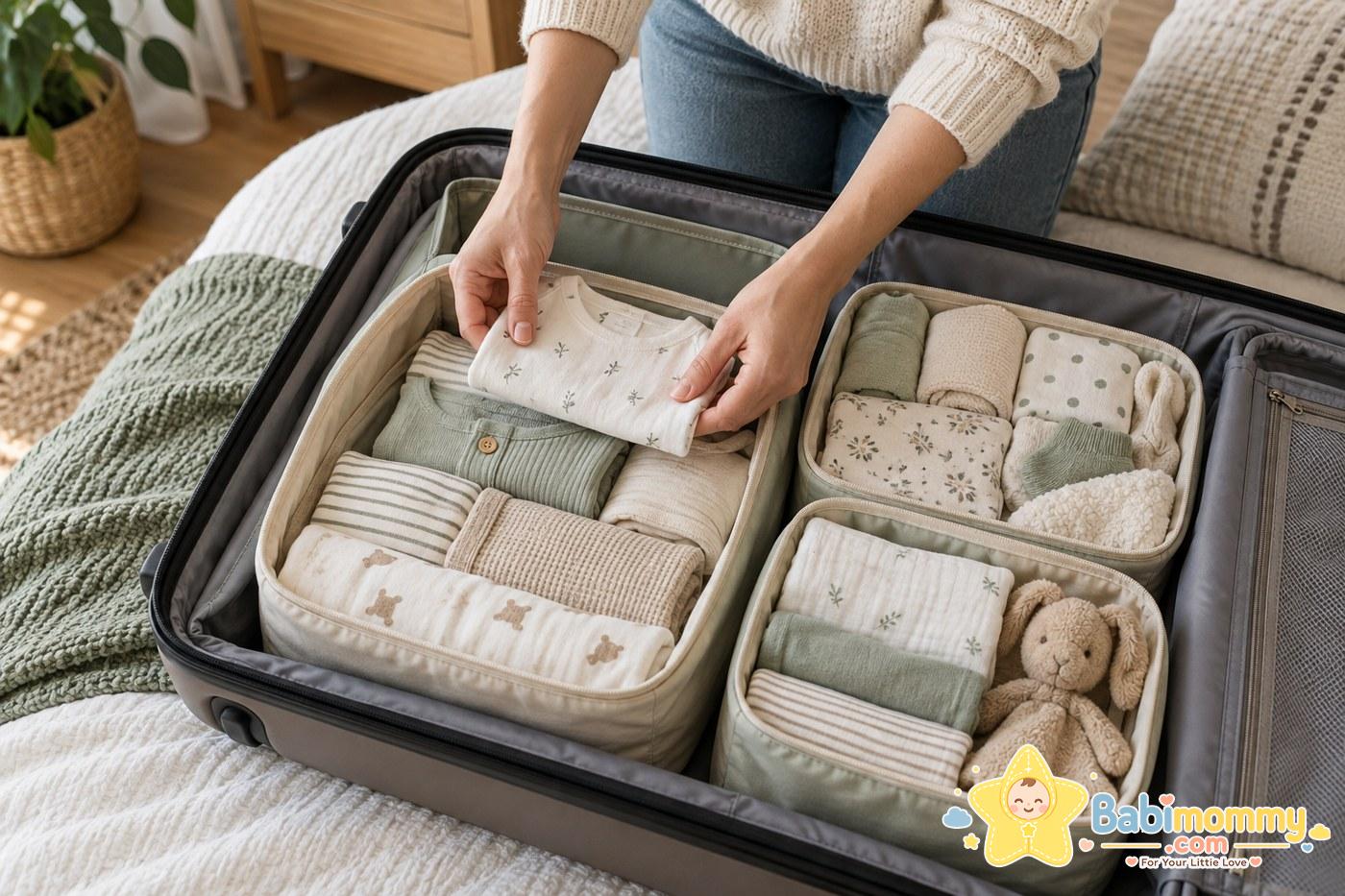
There are two useful ways to group clothes: by complete outfit or by clothing type. Complete outfits are easy to grab during a journey. Grouping by type works well when you will unpack at one destination and choose clothes each day.
You can combine them. Keep a complete change in the diaper bag, then divide suitcase clothes into daytime wear and pajamas. The aim is for another caregiver to find what is needed without asking where every item belongs.
| How you travel | Layout to try | Why it helps |
|---|---|---|
| Short visit with little unpacking | Complete outfits together | Grab one bundle rather than several separate pieces |
| Several nights in one place | Day clothes and sleepwear in separate cubes | Transfer groups to a shelf or drawer |
| Several children sharing luggage | A distinct color or label for each child | Keep similar small garments separate |
| Long travel day | A small spare-outfit pouch in your accessible bag | Reach a change without opening the main suitcase |
Measure the Bag You Already Use
Check usable space inside your suitcase or backpack, including narrow openings and curved corners. A cube may fit flat on a bed yet become too thick once filled. Dimensions from different brands are not standardized by labels such as “small” or “medium.”
Use folded clothes to estimate the size you need before ordering. Leave enough room to close zippers comfortably and retrieve items without pulling out the whole cube. Baby clothes do not require a special organizer simply because they are small.
If you already own adult packing cubes, test them first. One can hold several grouped outfits, while a smaller pouch handles socks. Replace only the pieces that do not work for your current bag.
Listings to Compare for Your Setup
Use these options to compare size, opening style and care instructions. We have not independently tested these sets, and the guide does not certify their waterproofing, materials or zipper durability.

Pros
- Embroidery-ready blank canvas
- Soft seersucker cotton
- Sturdy grab-and-go handle
- Smooth zipper no snagging
- Lightweight space-saving set
Cons
- No customer reviews yet
- Blank design requires DIY effort
- Only navy color available

Pros
- Highly rated with 4.7 stars
- Versatile for wet and dry uses
- Durable double-zipper construction
- Compact and easy to carry
- Affordable and great value
Cons
- Smaller than expected for bulky items
- Not fully waterproof
- Limited to smaller items only

Pros
- Eco-friendly TPU material
- Waterproof lining for wet items
- Clear visibility for quick access
- Versatile 5-piece set
- Adorable dinosaur design
Cons
- Limited color options
- May not fit larger bottles
- Zippers might snag on fabric


Pros
- 2 pack for versatile use
- Water resistant zipper
- Machine washable material
- Compact and lightweight
- Snap handle and hanging loop
Cons
- Only one compartment per bag
- Not fully waterproof, only resistant
- Small size limits large items
The Seersucker Packing Cubes are worth examining if you prefer a fabric organizer. Confirm the actual fiber composition, usable dimensions and washing instructions rather than assuming all seersucker products have the same care requirements.
For the Baby Diaper Bag Organizer Pouches, establish which pieces are intended for clean clothes and which, if any, are designed to contain damp items. A water-resistant pouch should not automatically become your wet laundry bag.
For the YOPCDJ 5PCS Diaper Bag Organizer Pouch Set, count how many pieces you will actually use. Compare their dimensions with your backpack before choosing a set because it includes more bags.
Mesh, Clear Panels or Plain Fabric?
Mesh helps you spot garments without opening every cube. Plain fabric can feel simpler and lets you use color to distinguish groups. Clear panels also show contents, but stiff corners or small openings may make them less convenient for soft clothing.
Choose based on access and care, not a blanket claim that one material is safest or most durable. Check seams, zipper tracks and handles in close-up photographs. A material name alone does not tell you how well a finished bag is constructed.
If a cube has a coating, read whether it can be washed and how it should dry. Do not assume “wipe clean” means machine washable, or that a mesh panel will keep out a spill.
Make One Spare-Outfit Pouch Easy to Reach
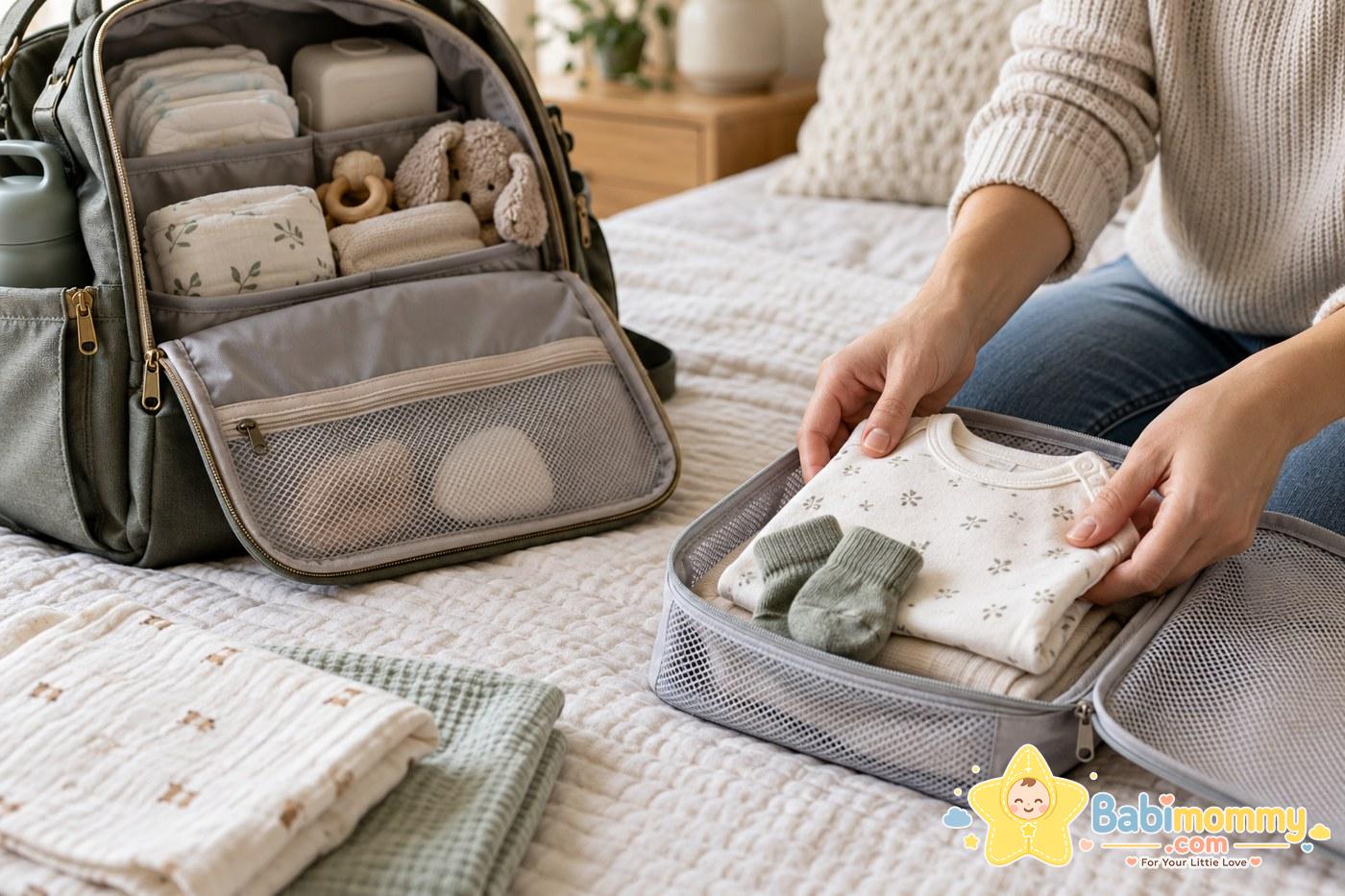
Pack a complete change that suits your baby and the journey: clothing, socks if needed and any other usual layer. Keep that pouch in the bag you can access during the trip, rather than in checked luggage or under everything in the trunk.
For a longer journey, choose the number of changes using your baby’s ordinary routine, travel time and likely delays. There is no single outfit count that fits every child. Extra changes are more useful when you can find them quickly.
After using the spare outfit, restock the pouch before the next outing. A beautifully labeled bag with nothing inside is easy to overlook when you are packing in a hurry.
How Many Cubes Should You Start With?
As a starting layout, try one for daytime clothing, one for pajamas and one small pouch for accessible changes or accessories. This is a packing suggestion, not a required set size. You may need fewer for a weekend or a different arrangement when several children share luggage.
For a longer stay, work out when you can wash and fully dry clothes. Pack for that interval with a reasonable allowance for changes, rather than buying enough organizers to hold your baby’s entire wardrobe.
Lay out what you plan to take before filling cubes. It is easier to remove duplicate outfits while they are visible than after every pouch is zipped shut.
Keep Used Clothes Separate From Clean Ones
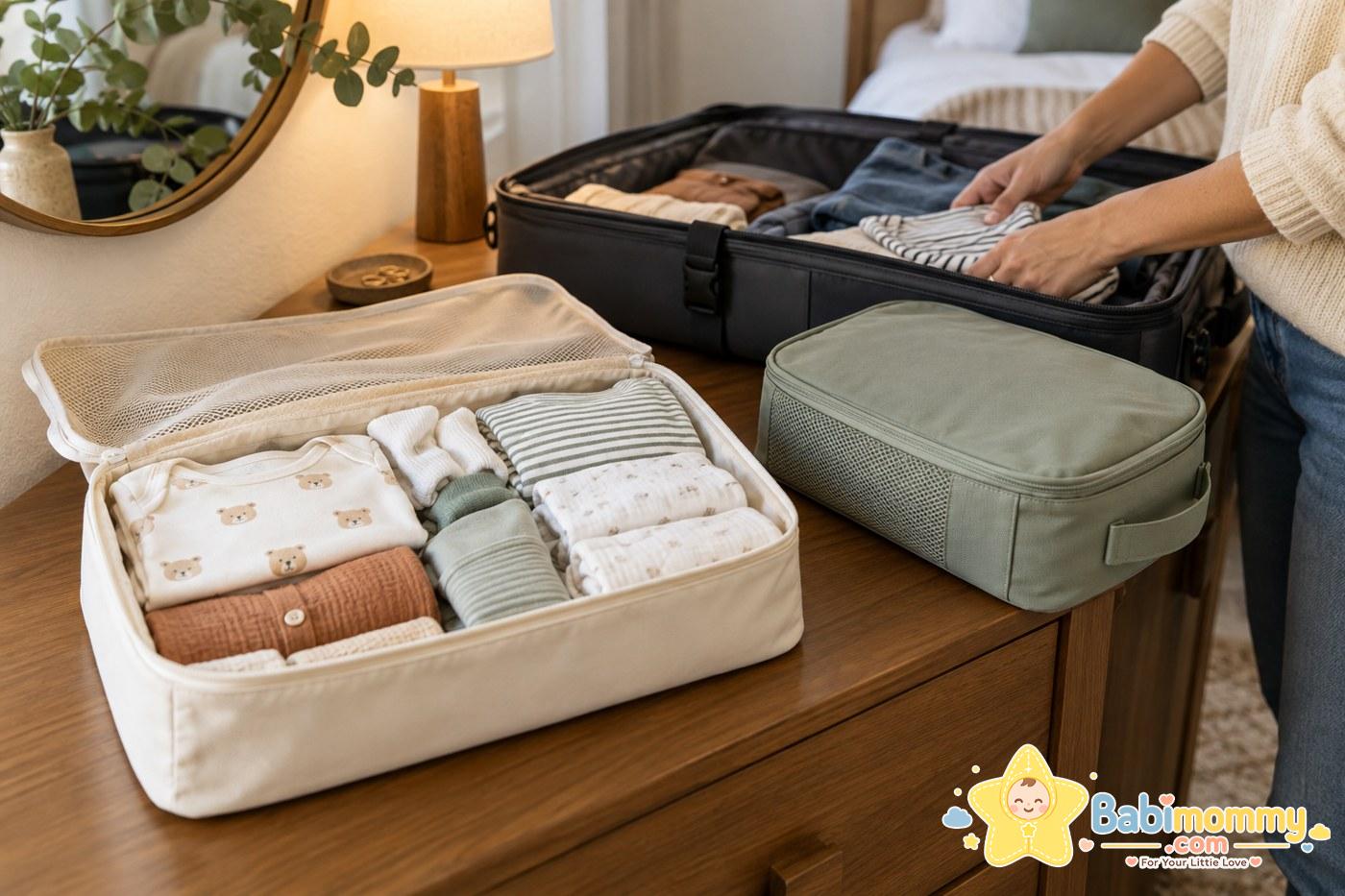
Give worn clothing a separate place from the beginning. A simple laundry pouch may be enough for dry used clothes. Damp or heavily soiled clothing needs containment appropriate to the situation and prompt washing; do not assume an ordinary cube is leakproof.
Do not leave wet clothes sealed for the rest of a long holiday. Deal with them when facilities are available, and dry both the clothing and any reusable bag according to their care instructions.
At your destination, keep clean cubes on a clean surface and establish one consistent laundry location. See our baby travel laundry bag guide if you need a separate organizer for the return journey.
Do Compression Cubes Save Enough Space?
Compression can reduce bulk for some garments, but it does not reduce weight and may make frequent access less convenient. A tightly packed cube can also become an awkward shape inside a small diaper bag.
Try normal folding or rolling before adding compression. Leave frequently used changes loosely accessible, and avoid pulling a zipper against overstuffed fabric. A little spare room can make repacking much easier after the first day.
Do not judge a set only by how much it holds in a product photo. Think about how you will take out one garment and put the others back while traveling.
Keep Toiletries and Feeding Items in Their Own Storage
A clothes cube is not a leak barrier for lotion, nor does a clear panel automatically qualify it as an airport liquids bag. Store toiletries separately and check the rules for your itinerary. Our compartmented toiletry bag guide covers that part of packing.
Keep clean feeding equipment in storage appropriate to those items rather than loose among clothing. Use each pouch for a clear purpose so clean supplies do not get mixed with laundry.
Try a Five-Minute Repacking Test
- Fill the cubes with the clothes planned for your trip.
- Put them in the actual suitcase or backpack and close it.
- Retrieve a spare outfit without opening every cube.
- Put the remaining clothes back without forcing a zipper.
- Check that used clothing will have a separate place on the way home.
If the system passes that test, you probably do not need more organizers. Choose cubes that make your next outfit easy to find, and keep the routine simple enough to use when everyone is tired.


Write Your Review
No reviews yet. Be the first to share your experience!