

Breast milk stains are protein-based and can become harder to remove if heat sets them into fabric. A quick rinse and a measured wash routine usually give you the best chance of lifting a fresh mark. The exact approach still depends on the garment’s care label, color, and fabric, so test any stain product on a hidden area first.
Treat a fresh stain promptly
Remove excess milk by gently blotting with a clean cloth. Avoid rubbing aggressively, which can push residue deeper into fibers or stretch delicate fabric. Rinse the stained area from the back with cool water, allowing the water to carry the milk out of the cloth. Do not start with hot water; heat can make protein stains more difficult to remove.
Apply a small amount of detergent or a fabric-safe stain treatment according to its label. Work it in gently with your fingertips or a soft cloth. Give the product the contact time listed on its instructions, then wash the garment using the care-label temperature and cycle.
Handle a stain that has already dried
For a dried mark, soak the garment in cool water with detergent if the fabric label allows it. Avoid leaving delicate clothing in an extended soak unless the care instructions permit that. After soaking, pretreat the stain and wash normally. Some stains may need a second wash, but check the fabric between attempts rather than escalating to a harsh treatment.
If you use oxygen-based bleach or another stain remover, confirm that it is safe for the fabric and color, follow its label exactly, and never mix cleaning products. Chlorine bleach can damage or discolor many garments and should not be used unless the garment label and product directions explicitly allow it.
Inspect before using the dryer
After washing, check the spot in good light while the fabric is still damp. If a shadow remains, repeat a fabric-safe treatment before machine drying. Dryer heat can set residual stains, making later removal harder. Air-dry the garment while deciding what to do next if you are unsure.
Once the stain is gone, dry the clothing according to its label. Fold or hang it only when fully dry to avoid musty odors.
Keep a simple stain kit nearby
A small laundry basket, clean cloth, and the stain treatment you already trust can make a messy feeding moment easier to manage. You do not need a large assortment of products. For an outing, place a spare outfit and a sealable wet bag in the diaper bag; treat the garment properly when you get home rather than storing it damp for a long time.
For delicate or special garments, follow the maker’s instructions or use a professional cleaner. If a baby develops skin irritation after wearing a freshly washed item, stop using it and discuss the reaction with a healthcare professional.
Mistakes that can make stains worse
Avoid hot water as the first step, vigorous scrubbing, and drying a visibly stained item with high heat. Do not combine stain remover, bleach, and other cleaners. Do not assume a stain product is suitable for every fabric or safe for every household; read the label and store all laundry products away from children.
Illustrated setup and routine

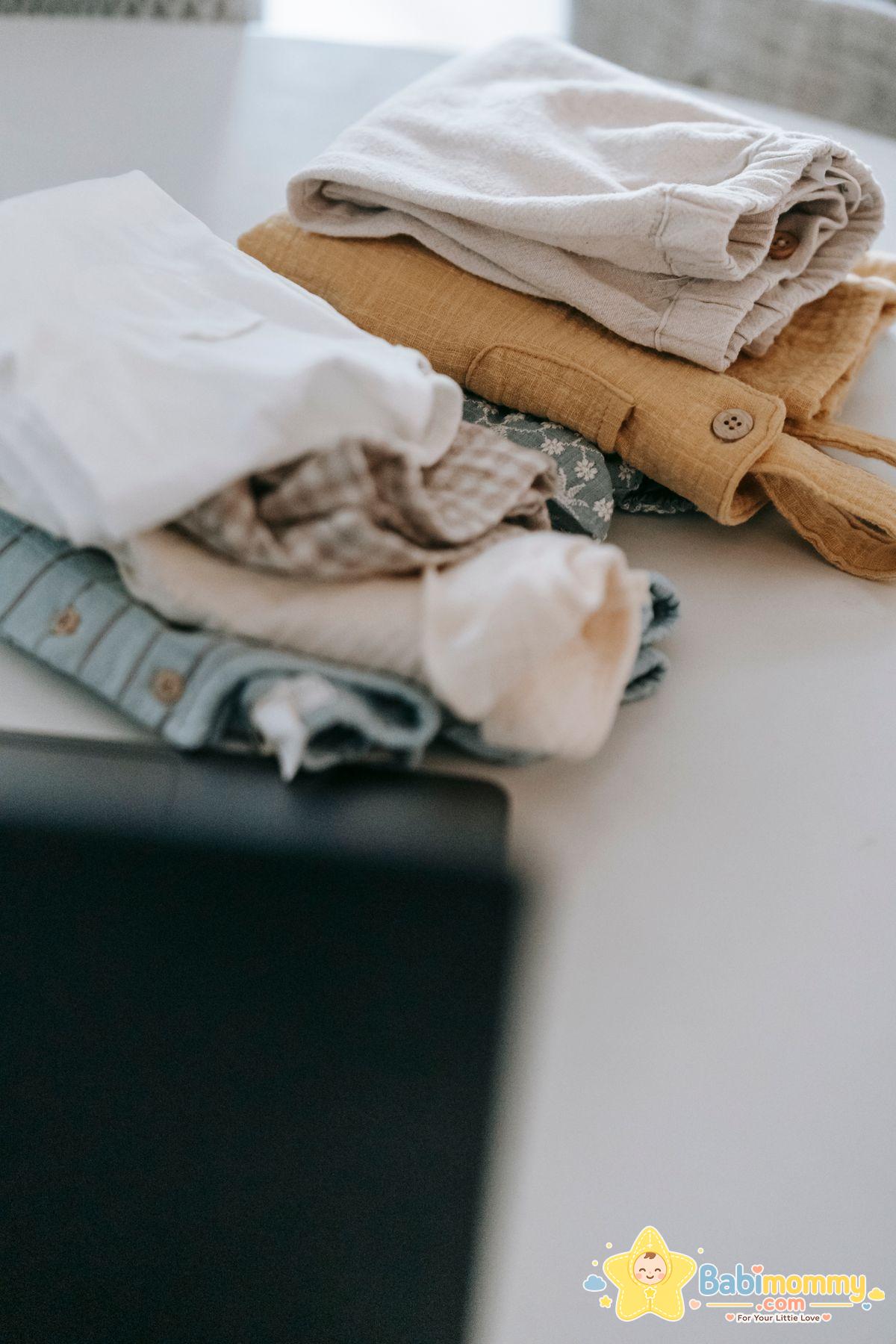

Adjust the method to the fabric
A cotton bodysuit can usually tolerate a different treatment from wool, silk, embroidered clothing, or a garment with a waterproof layer. Read the care label before soaking or using a stain product. For delicate items, test any detergent on an inside seam and use the gentlest method the label permits. If the garment is valuable or the care label is unclear, professional cleaning is safer than experimenting with multiple products.
When you are away from home, focus on containing the mess rather than fully treating it on the spot. Blot the excess with a clean cloth, change the baby, and place the garment in a separate washable wet bag. Do not leave damp clothing in a sealed bag for several days; treat and wash it when you can. Keep stain removers and laundry products closed and stored away from children.
Keep a simple stain log for repeat problems
If a stain returns after washing, note the fabric, detergent, water setting, and treatment used. This can reveal that the spot was not fully removed before drying, or that a particular fabric needs a gentler product. Check the garment in natural light before putting it in the dryer. Repeat a compatible wash rather than escalating immediately to bleach or strong cleaners.
Do not rely on sunlight as a guaranteed stain treatment or disinfectant. It may help dry clothing outdoors, but follow fabric care instructions and avoid leaving colors in strong sun long enough to fade. For persistent stains, choose products labeled for the fabric and follow their directions; never mix cleaning agents.
Set expectations for older stains
A stain that has been washed and dried several times may not disappear completely. It is still worth trying one careful pretreatment if the fabric allows it, but stop if fibers begin to weaken, stretch, or lose color. Baby clothes that are clean but lightly discolored can be kept as play clothes if in good condition; items with damage or residues should not be returned to use.
Frequently asked questions
Does cold water help remove breast milk stains?
Cool water is a sensible first rinse for a protein-based stain and helps avoid applying heat before the residue is removed.
Can I use regular laundry detergent?
Usually, if it is suitable for the garment and used according to its label. Check the clothing care instructions and your household’s needs.
Should I use hot water?
Do not begin with hot water. Wash at the temperature allowed by the garment label after pretreating.
Can I put a stained item in the dryer?
Check the stain first. If it remains, pretreat and wash again before applying dryer heat.
What if the stain has been there for days?
Soak in cool water with detergent if the care label permits, pretreat, and wash. Older stains may take more than one fabric-safe attempt.
Is bleach safe for baby clothes?
Only use a product the garment label allows, follow its directions exactly, and never mix it with other cleaners.
How can I manage stains while away from home?
Blot excess, change the baby, and store the garment in a washable wet bag. Treat and wash it when you return.
Related Babimommy reading
If feeding and laundry overlap in your daily routine, our guide to keeping mealtime preparation organized offers more home-routine ideas.
Related guides
For more practical ideas, see our guides to travel laundry bags and diaper disposal bags for outings.
Final thoughts
Blot, rinse cool, pretreat gently, wash by the care label, and inspect before drying. That sequence is simple to remember and avoids the most common mistake: applying heat before the stain is gone.


