

New baby clothes often arrive folded, packaged, or passed along from another family. Washing them before first wear is a straightforward way to remove dust from handling and prepare fabric according to its care label. A gentle, consistent routine also helps you notice loose snaps, rough seams, or damaged garments before they reach the baby’s skin.
Check the care label and inspect each item
Separate garments by color and fabric weight, then read the labels before washing. Look for special instructions on water temperature, drying, and whether the item should be hand-washed. Check for loose threads, sharp tags, missing snaps, and decorative pieces that could detach. Set aside anything damaged rather than assuming a wash will fix it.
For secondhand clothing, check pockets and cuffs and wash the items separately from heavily soiled household laundry. If the garment has a strong odor or visible stain, treat it according to the fabric instructions before washing.
Choose a detergent and wash cycle
Use a detergent suitable for the fabric and follow the amount on its label. More detergent is not necessarily better; using too much can leave residue. Families may choose a fragrance-free product if scents bother anyone in the household, but individual skin sensitivities differ. If your baby has a diagnosed skin condition or a history of reactions, ask a pediatric clinician for personalized advice rather than relying on a universal “baby detergent” claim.
Use the warmest water allowed by the garment label and your washer settings. A regular cycle is often adequate for ordinary new clothes; delicate knits or items with special construction may need a gentler cycle. Avoid adding fabric softener unless the garment’s care instructions and your household’s needs support it.
Wash small items so they do not disappear
Put socks, mittens, and other tiny pieces in a mesh laundry bag. Fasten snaps and zippers where appropriate to reduce snagging, but do not force closures that are delicate. Keep similar fabrics together to avoid abrasion from heavier items such as towels or jeans.
After washing, check that items are clean and that no detergent residue or strong odor remains. Rewash if something still looks dirty or feels unusually slick. Dry according to the label, and make sure garments are fully dry before putting them away.
Build a repeatable laundry routine
For a new-parent household, a small “first wash” basket can collect incoming items until there is a full load. Keep new garments separate from used ones until washed, especially if they have been stored in packaging or in a donation bag. Once clean, sort by size so the clothes that fit now are easy to reach.
Do not wash car-seat covers, sleep products, or other safety-related gear by guesswork. Follow each product’s manual; washing methods can affect fit, fire-retardant properties, or performance.
Common laundry mistakes
Do not mix bleach or cleaning chemicals, and never improvise a treatment that conflicts with a fabric label. Avoid overfilling the washer, which can make rinsing less effective. Do not leave wet clothes in the machine for an extended period. Finally, do not assume every item labeled “newborn” is safe or well made—inspect construction and use products only as intended.
Illustrated setup and routine

Decide what to wash together
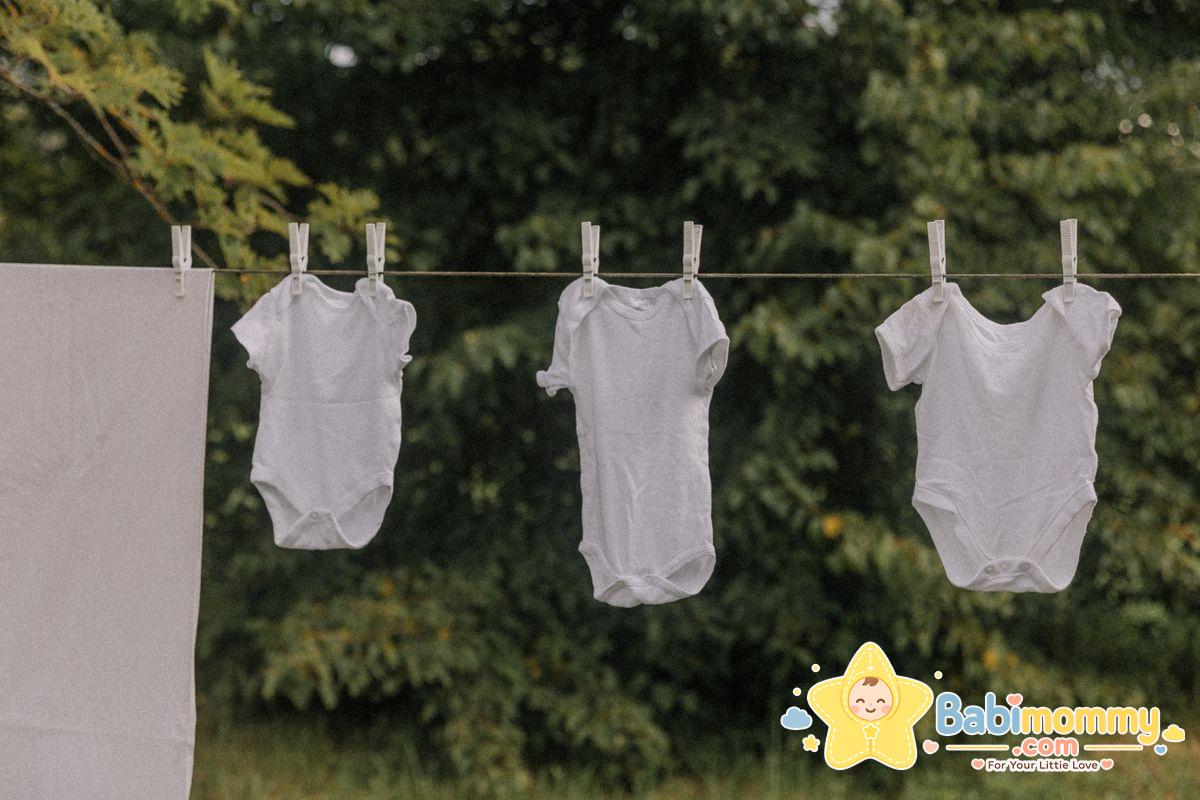
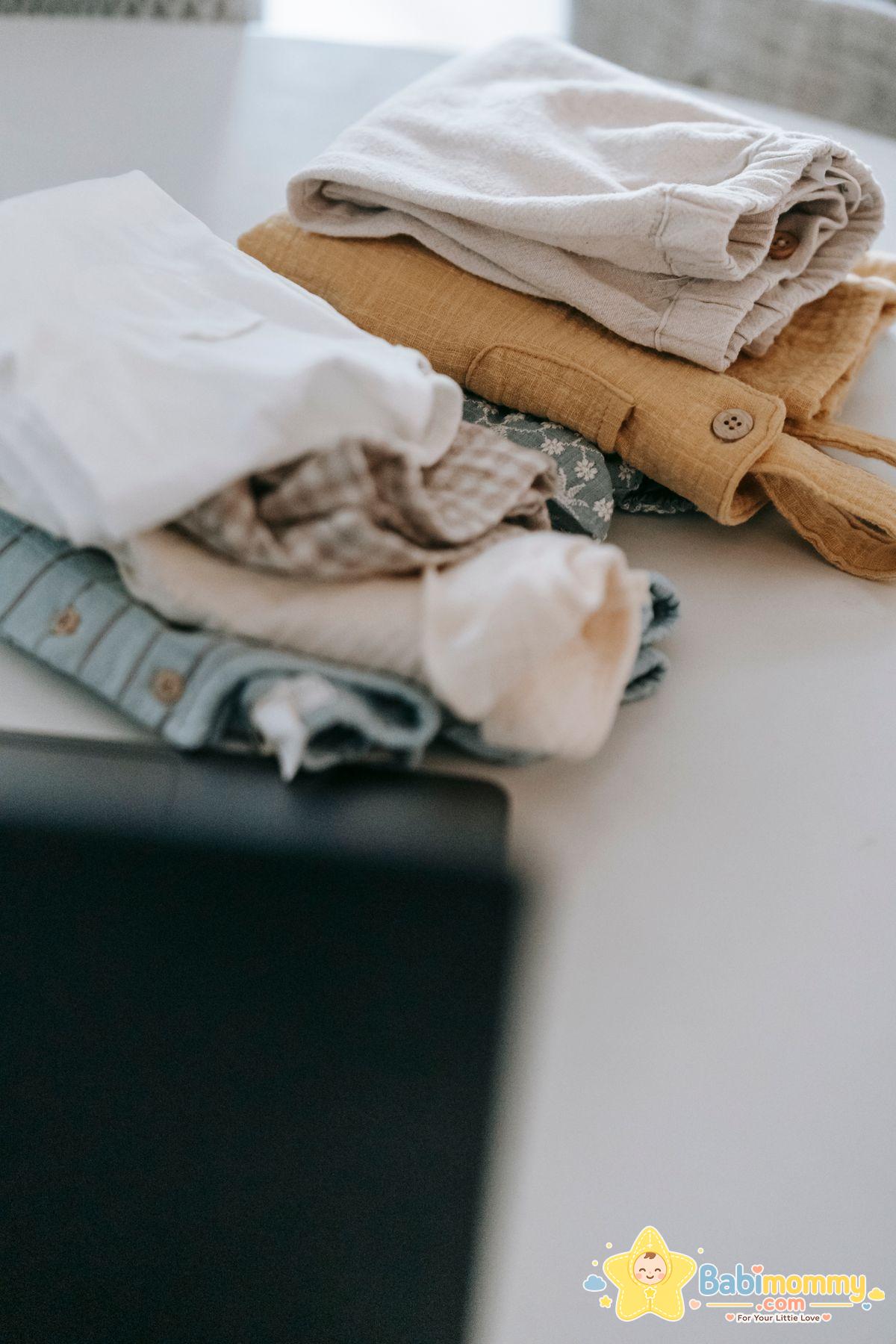
Group clothes by color, fabric weight, and care instructions. A load of small cotton bodysuits can usually be handled differently from a delicate knit, a dark garment that may bleed, or a sleep product with special cleaning directions. Use a mesh bag for socks, mittens, and other tiny pieces. Do not add a garment to a hot wash simply because another item in the load can tolerate it; the label on each garment is the guide.
If new clothes include a waterproof layer, elastic, snaps, or decorative trim, check the label for drying and heat limits. Avoid ironing over snaps or printed designs. For secondhand garments, inspect seams and closures before washing, and keep anything damaged out of the baby’s clothing rotation.
Choose a routine you can repeat
For a first wash, measure detergent according to its label and the washer load size. Run an extra rinse only if your washer has residue or your household’s clinician-recommended routine calls for one. Fragrance-free detergent can be a reasonable household preference, but it is not a treatment for eczema or an allergy. If the baby develops persistent irritation, speak with a pediatric clinician rather than repeatedly changing laundry products without guidance.
When the cycle finishes, remove the clothes promptly, check for marks, and dry them completely. Fold items only when they are fully dry, then store by size. A clean basket marked “washed” helps another caregiver distinguish prepared clothes from items still waiting for laundry.
Protect equipment with its own manual
Do not assume that a car-seat cover, sleep sack, wearable blanket, carrier, or stroller insert can be washed like a onesie. These products may have precise cleaning and reassembly requirements. Use the product manual and the manufacturer’s care directions, then confirm that straps, closures, and components are fully dry and properly reassembled before use.
Frequently asked questions
Do new baby clothes need to be washed before use?
Many caregivers choose to wash them first to remove dust from handling and prepare the fabric. Follow the label and your family’s health guidance.
Should I wash baby clothes separately?
There is no single rule for every household. Separating by color, fabric, and soil level helps protect garments and makes the routine easier to manage.
What detergent should I use?
Choose one that cleans effectively and suits your household. If your baby has a skin condition, ask a clinician about specific products.
Can I use fabric softener?
Check care labels and consider whether added fragrance or coating is appropriate for your family. It is not necessary for most garments.
What water temperature is best?
Use the temperature permitted by the garment label and your washer. The label should guide the decision.
How do I wash socks and tiny accessories?
A mesh laundry bag can keep small pieces together through the wash and reduce the chance they disappear.
Can I wash a car-seat cover like clothing?
Only follow the car-seat manufacturer’s manual. Incorrect cleaning or reassembly can affect how the seat works.
Related Babimommy reading
For more practical organization, see our guide to building manageable baby-care routines at home.
Related guides
For more practical ideas, see our guides to travel laundry bags and diaper disposal bags for outings.
Final thoughts
Inspect first, follow the care label, use the correct amount of detergent, and dry items fully. A careful first wash is simple, but checking each garment and safety-related item’s own instructions is what makes the routine reliable.


