

Choosing between thermos bottle warmer vs portable warming sleeve options is easier when you focus on the real routine rather than the product labels. A thermos can carry hot water for a planned preparation method, while a warming sleeve surrounds a bottle and uses its own design or power source. Follow formula or milk handling guidance and the product manual; never guess at safe temperature or timing. This guide compares the main differences, likely advantages and limitations, and practical checks before purchase. It is an editorial overview of product types, not a hands-on test of individual models. Confirm the current manufacturer’s specifications and instructions before use.
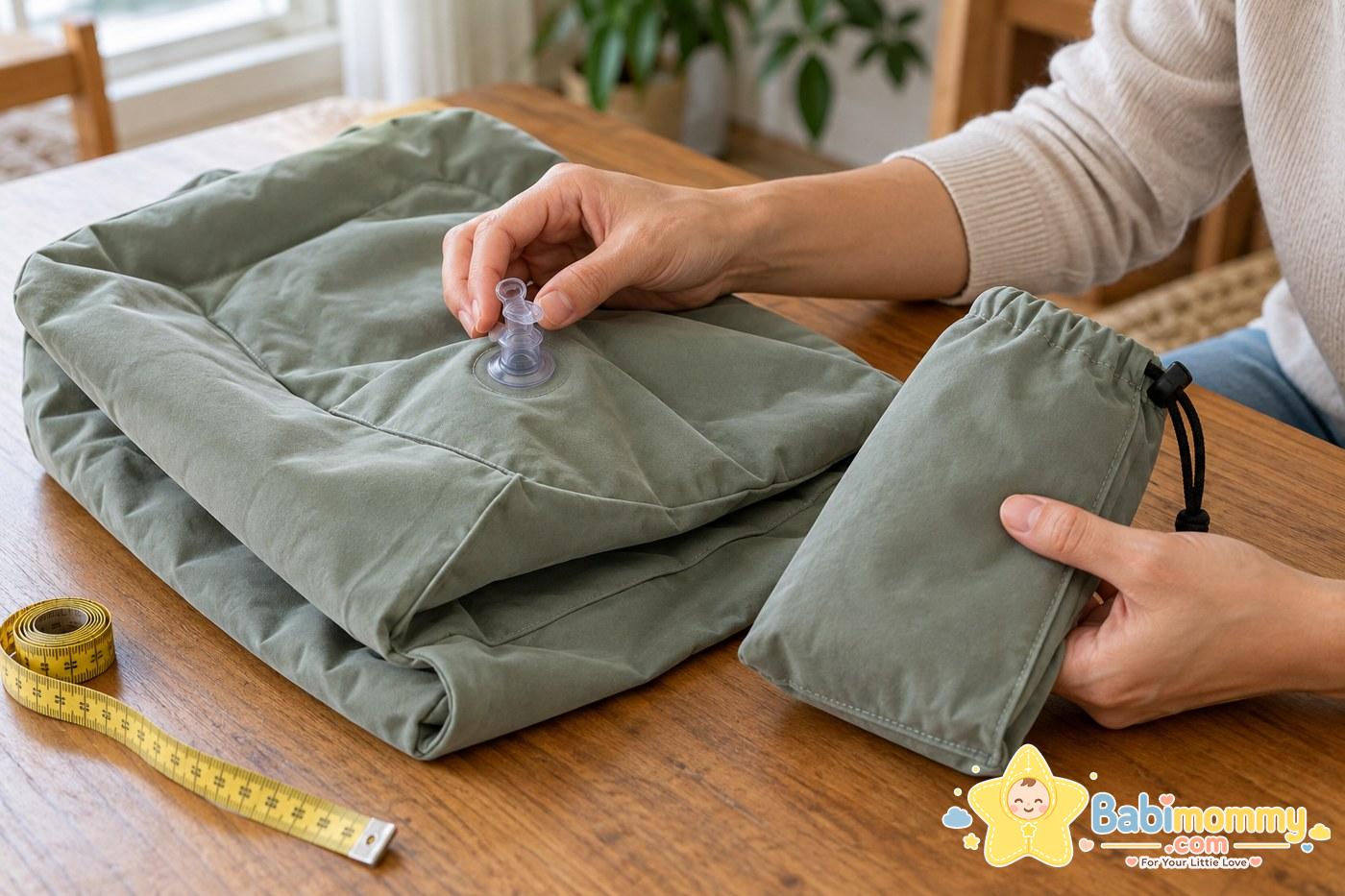
Hands inspecting an inflatable travel cushion valve and carrying pouch at home.
What to prioritize before buying
Begin with fit, then check ease of use and care. Read the full product description, measure the relevant space, and look for the maker’s age, size, and compatibility guidance. A thermos can carry hot water for a planned preparation method, while a warming sleeve surrounds a bottle and uses its own design or power source. Follow formula or milk handling guidance and the product manual; never guess at safe temperature or timing. A practical item should fit the home and be manageable for the people who will use it.
Option one: Thermos Bottle Warmer
Thermos Bottle Warmer: This format is most compelling when the feature at its center matches a recurring need. Think about the exact moment it will be used: where it will be set up, who will handle it, and what happens right afterward. Check its size, materials, closures, and any included accessories instead of assuming every model in this category is built the same way.
Potential advantages: It may make its intended task straightforward, be familiar to other caregivers, or suit the space where it is used most. Potential drawbacks: A specific design can take more room, require extra cleaning, or work best only with a compatible product. Verify the instructions and use limits before choosing.
Option two: Portable Warming Sleeve
Portable Warming Sleeve: The alternative offers a different way to approach the same broad need. It can appeal to families whose priorities are portability, flexibility, comfort, or cleanup. Check the exact model’s dimensions and operation. If it is used with other gear, confirm compatibility rather than relying on a broad product description.
Potential advantages: It may suit a different home layout or family routine and can sometimes be easier to store or share. Potential drawbacks: Its special feature may not be useful to every household, and it may need more setup or careful maintenance than expected. A product that is awkward to clean or difficult to use can quickly lose its appeal.
Comparison points that matter
Fit: Measure the child, storage area, furniture, vehicle, or surface involved. Confirm dimensions and compatibility for the exact model. Setup: Consider whether it needs assembly, adjustment, or an additional accessory, and whether another caregiver can repeat the steps. Care: Check washing, drying, and inspection requirements. Storage: Decide where it will go between uses and whether it can be stored safely without taking over a shared space.
Look closely at materials and construction. Fabric items can differ in stretch, seams, and wash care; rigid products can vary in weight, edges, and stability. Parts that move or detach deserve extra attention. A feature is only helpful if it works as intended and can be kept in good condition.
Think about how the child’s routine may change. A product may fit well at one stage and become unsuitable later. Follow the maker’s stated limits, inspect fit as the child grows, and stop using an item that is damaged or no longer works correctly. A thermos can carry hot water for a planned preparation method, while a warming sleeve surrounds a bottle and uses its own design or power source. Follow formula or milk handling guidance and the product manual; never guess at safe temperature or timing.
Pros and cons at a glance
| Option | Possible advantage | Possible limitation |
|---|---|---|
| Thermos Bottle Warmer | Its main design may simplify a regular task. | Its setup, size, or care needs may not suit every household. |
| Portable Warming Sleeve | Its alternative format may fit a different routine. | Compatibility and maintenance still need checking. |
This is a category-level comparison, not a ranking of brands. Read current listings carefully; check what comes in the package and whether any pictured accessories are sold separately. If a detail is unclear, consult the manufacturer before relying on it.
Practical use and care advice
Before the first use, read all instructions and inspect the item for damage. Assemble it as directed and practice the routine while there is time to check fit and operation. Keep manuals accessible to anyone who shares caregiving. Clean the product according to its care directions and let washable or wet parts dry fully before storing them.
When the product involves a child, keep supervision appropriate to the activity. Do not add accessories that interfere with restraints, airflow, visibility, moving parts, or the intended setup. For products related to feeding, sleep, bathing, travel, or health, follow relevant professional guidance as well as the manufacturer instructions.
Set a simple reminder to check the item for wear. Look at seams, fasteners, wheels, straps, closures, seals, and surfaces that contact food or skin. Replace components when the maker recommends it, and stop use if a part becomes loose or damaged. A thermos can carry hot water for a planned preparation method, while a warming sleeve surrounds a bottle and uses its own design or power source. Follow formula or milk handling guidance and the product manual; never guess at safe temperature or timing.
How to keep the setup manageable
Give the product a clear home near the routine where it is used. Keep instructions with it, store small parts together, and avoid adding accessories that make setup harder. If it needs cleaning after each use, decide where it will dry before you bring it into the home.
Review the setup periodically. A room can change, a child can grow, and a once-convenient location can become cluttered. Adjust or stop using the product when its fit or function no longer matches the intended use.
Related Babimommy guides
Explore baby play and floor-time ideas, portable nursery routines, and laundry care for baby items for more ideas on related family routines.
Frequently asked questions
Which option is easier to use every day?
That depends on the family’s routine. Thermos Bottle Warmer may work well when its core feature solves a frequent need; Portable Warming Sleeve can make more sense when its format fits the space, schedule, or clean-up routine better.
How should I compare the two?
Start with fit and intended use, then check setup, cleaning, storage, and compatibility. Product names alone do not confirm exact dimensions or included parts.
Is either option suitable for travel?
It depends on size, portability, care instructions, and where it can be used safely. Check whether it can be packed and cleaned without improvised workarounds.
What should I check before ordering?
Read the current product specifications, age or size guidance, materials, package contents, warranty details, and the manufacturer’s instructions for the exact model.
Can a child use it independently?
Only if the product is designed for the child’s stage and the manufacturer allows it. Introduce it gradually and supervise whenever the activity or product requires adult attention.
How do I care for it?
Follow the care label, clean residue promptly, and dry all pieces completely before storage. Inspect closures, seams, edges, and moving parts periodically.
Does the more expensive option last longer?
Price alone is not a reliable measure of durability. Compare materials, replacement parts, warranty terms, and how demanding the maintenance routine will be.
Can both options be useful?
They may suit different situations, but buying both is only helpful when each has a clear role and there is enough space to store them.
Final thoughts
Choose Thermos Bottle Warmer if its main advantage solves a real, recurring problem and the exact model fits your setting. Choose Portable Warming Sleeve if its alternative design better matches your priorities. There is no need to buy the option with the longest feature list; reliable fit, clear instructions, manageable care, and a routine you can maintain are better guides.
Editorial note: This guide compares product categories and does not claim hands-on testing. Product specifications and instructions can change, so confirm current details before purchase.


Write Your Review
No reviews yet. Be the first to share your experience!