

A stroller organizer attaches near the handle and keeps a small set of items close. A crossbody diaper bag stays with the caregiver when the stroller is parked or folded. An organizer saves reaching into a large bag but has limited capacity; a crossbody bag travels with the adult but can feel heavy. Organizers range from a small pocket to cup holders and zippered compartments. Check handlebar fit and stroller weight limits. Crossbody bags vary in strap length, access, and changing supplies. A strap that works while walking may be awkward while carrying a baby.
How we approached this comparison: This practical editorial guide compares purpose, fit, setup, cleaning, and day-to-day use. It is not a hands-on product test. Confirm the exact model’s instructions and current safety guidance before use.
Start with the task you want to make easier, then compare the actual products you are considering. The sections below focus on household routines rather than feature lists alone.
At a glance
| Factor | First format | Second format |
|---|---|---|
| Typical strength | A stroller organizer attaches near the handle and keeps a small set of items close. A crossbody diaper bag stays with the caregiver when the stroller … | Organizers range from a small pocket to cup holders and zippered compartments. Check handlebar fit and stroller weight limits. Crossbody bags vary in … |
| What to verify | Fit, instructions, care | Setup, compatibility, storage |
| Best starting point | Match it to your usual use | Compare exact models |
How the first option works
A stroller organizer attaches near the handle and keeps a small set of items close. A crossbody diaper bag stays with the caregiver when the stroller is parked or folded. An organizer saves reaching into a large bag but has limited capacity; a crossbody bag travels with the adult but can feel heavy.
Its practical advantage is strongest when the format fits the moment it is meant to simplify. Consider setup, who will use it, and whether the child’s size or stage changes the fit. A well-designed product can still be inconvenient if it needs extra space, tools, or maintenance that no caregiver can sustain.
What the alternative changes
Organizers range from a small pocket to cup holders and zippered compartments. Check handlebar fit and stroller weight limits. Crossbody bags vary in strap length, access, and changing supplies. A strap that works while walking may be awkward while carrying a baby.
The alternative addresses a related need through a different layout or method. Look beyond staged photos at attachment, access, parts that need washing, and how quickly an adult can put it away. Picture the least convenient moment of the day; the option that remains manageable then may be used more consistently.

Fit and compatibility
Match storage to route and stroller. A short walk may need phone, keys, water, and a few diapers; a day trip needs a larger kit. Avoid overloading the handle. Test steering and stability after packing.
Measure the actual space or equipment before ordering. Broad category names do not guarantee compatibility; details may depend on a model, surface, age, material, or dimension. Do not force a fit or block a required feature. If the manual is unclear, ask the manufacturer before relying on the product.
Daily routine
For a park loop, the organizer provides quick access. At a cafe or appointment where the stroller stays behind, a crossbody bag remains with the adult. Some families use both but should preserve folding access and stay within stroller limits.
Try the routine at home before using the item during a rushed outing or bedtime. Ask another caregiver to repeat the steps using the instructions. Notice whether both hands are needed, how the child responds, and how quickly it can be put away. A clear storage place helps handoffs.
Cleaning and upkeep
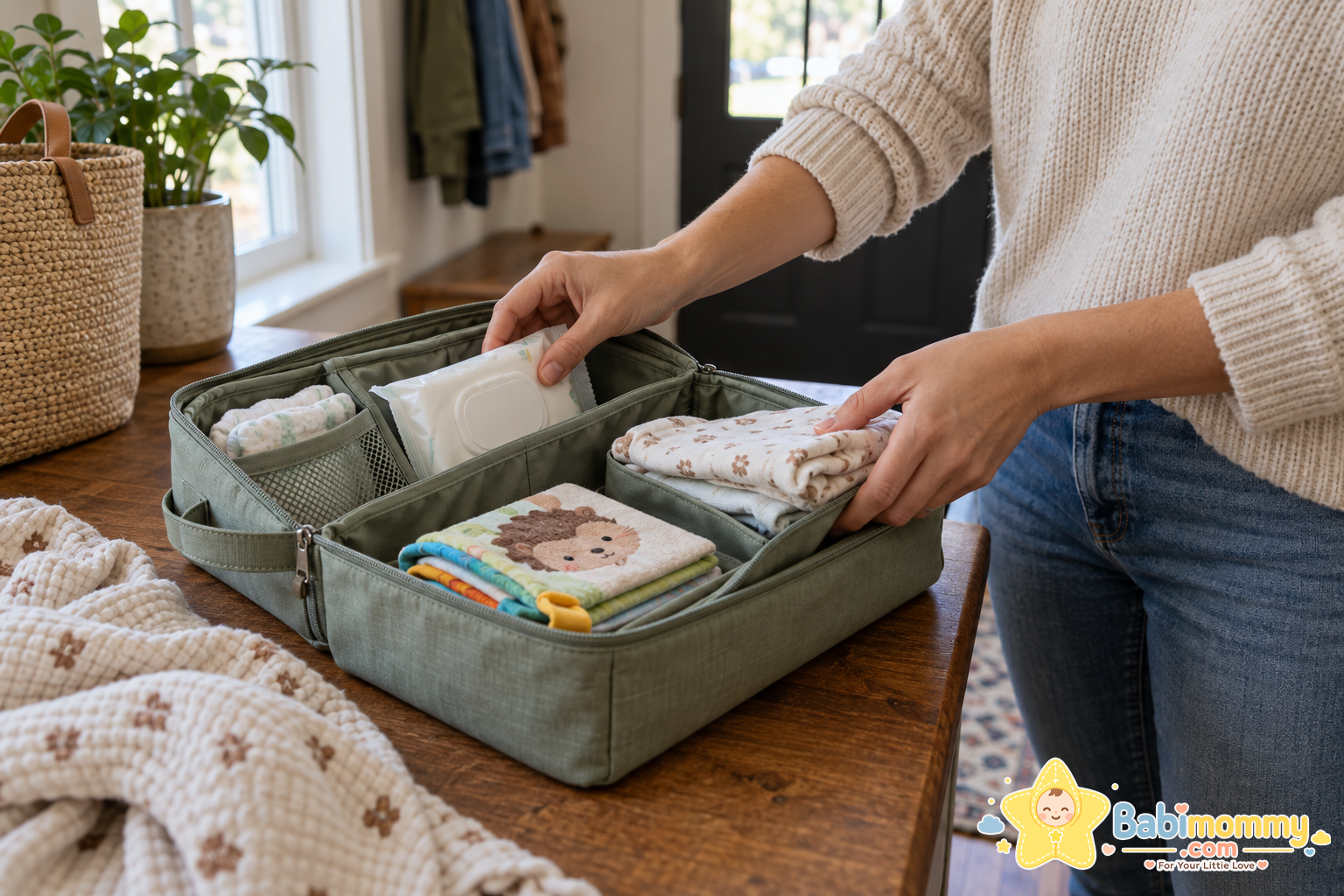
Wipe spills and inspect clips, zippers, and straps. Empty before folding if items could fall. Repack after outings and keep medicines or choking hazards secured away from children.
Maintenance affects whether a product stays useful. Check how often it needs cleaning, whether small parts come apart, how long it takes to dry, and whether replacement parts are available. Store it only when dry and inspect parts that move, fasten, or touch the child. Stop use if damaged.
Evidence and safety context
There is no standard statistic for the ideal stroller bag size. List what you use on a typical outing, measure the packed kit, and compare its load with the stroller manual. These recommendations or figures describe general context; they do not prove that one product style is best for every household. Use them with the product instructions and ask a qualified clinician when your child’s health or development affects the decision.
undefined
Who may prefer each format
A stroller organizer attaches near the handle and keeps a small set of items close. A caregiver who values that strength may prefer the first approach if it fits the room and directions. Organizers range from a small pocket to cup holders and zippered compartments. A household that values that difference may find the alternative easier. There is no need to choose one format forever when each serves a different situation safely.
undefined

A practical decision checklist
List three situations in which you expect to use the item. For each, compare setup time, child fit, adult comfort, cleanup, storage, and whether another caregiver could use it. Check model limits and total cost, including accessories or replacement parts. This is more helpful than comparing feature counts alone.
undefined
Advice for buying and using either option
Write down the problem you want to solve and the constraints that will not change: room size, storage, cleaning access, budget, or how often the product travels. Compare actual models, not category labels. Read the care instructions, measure the space, and check replacement-part availability. If the product affects sleep, feeding, bathing, carrying, or another safety-sensitive routine, review current professional guidance first.
Do not overload a stroller handle or block brakes, harnesses, or steering. Keep small objects away from a child who can reach them.
Useful context: There is no standard statistic for the ideal stroller bag size. List what you use on a typical outing, measure the packed kit, and compare its load with the stroller manual.

Frequently asked questions
Can I hang a heavy diaper bag on the handle?
Only if the stroller maker permits the weight; excess load can affect stability. Check the exact product manual and adapt the routine to your child and home.
Is an organizer enough for a full day?
It may suit a short outing; longer days often need more supplies. Check the exact product manual and adapt the routine to your child and home.
Can I use both bags?
Yes, if the total weight stays within limits and supplies do not interfere with steering. Check the exact product manual and adapt the routine to your child and home.
Which is easier when folding?
A crossbody bag stays with you; an organizer may need to be emptied or removed. Check the exact product manual and adapt the routine to your child and home.
What belongs in a small organizer?
Frequently used basics, not every nursery supply. Check the exact product manual and adapt the routine to your child and home.
How do I clean one?
Follow its care label and dry it before storage. Check the exact product manual and adapt the routine to your child and home.
Will a crossbody strap be uncomfortable?
Fit and load matter. Test it with the packed bag before a long walk. Check the exact product manual and adapt the routine to your child and home.
Can a child reach the organizer?
Possibly; keep small or hazardous objects secured. Check the exact product manual and adapt the routine to your child and home.
Testing the setup at home
Before relying on the item, try it in the place where it will be used most. Follow each setup step slowly, then repeat it at the normal pace of a busy day. Notice if a fastener is hard to reach, a surface is awkward to clean, a child can pull at an attachment, or another caregiver needs an explanation. Those observations can reveal compatibility issues that a product description cannot answer.
After several uses, review what was genuinely helpful and what created extra work. Check wear, fit, and storage again as the child grows or the room changes. If a manual leaves a safety question unresolved, contact the maker or a qualified professional rather than guessing. A short review helps the household keep only the features that support its actual routine.
Final thoughts
The choice comes down to the task, fit, and routine your household can maintain. Follow product-specific instructions, check compatibility, and reassess as your child grows. The most useful option fits your real space and makes the task easier without adding steps caregivers are unlikely to follow.
Revisit this stroller organizer vs crossbody diaper bag comparison when you want to review the differences and practical buying points.


Write Your Review
No reviews yet. Be the first to share your experience!