

New parents do not need a different organizer for every baby item. Start with the places where you actually change diapers or feed your baby, then keep a small working supply nearby. The rest can stay in ordinary storage. This makes the daily setup easier to carry and easier to refill.
Updated October 11, 2026. This is a research-based buying guide, not a hands-on product test. Rankings reflect the stated use case; they are not laboratory scores or customer-star ratings.
Quick comparison: what to choose and why
| Rank for a first setup | Type | Best use | Trade-off |
|---|---|---|---|
| 1 | Portable caddy | One small supply moving between rooms | Limited reserve capacity |
| 2 | Drawer bins | A regular changing area with existing drawers | Not designed for carrying |
| 3 | Rolling cart | A clear, level route and larger supply | Uses floor space and needs stability |
| Separate purpose | Stroller organizer | Only where the stroller permits it | Not interchangeable with a nursery caddy |
How to choose without buying too much
Choose the smallest arrangement that keeps your daily supplies visible. A caddy works when you often move between a bedroom and living room. Drawer bins make sense when everything happens at one dresser. A cart is worth considering only if its extra storage helps and it does not crowd your walking route.
The shopping list below contains repeated product identifiers, so its number of entries should not be read as a count of unique products tested. We have preserved the listings for comparison but do not claim a verified product-by-product performance ranking.
A simple refill calculation
Use your own recent diaper use to plan a working supply. Example: if your household used 8 diapers during a typical day and you refill once daily, a space for those 8 plus your chosen small reserve may be enough. Eight is an example, not a normal-use target for every baby.
Put a wipes pack beside that supply and add only the creams or other items you actually use. A full unopened bulk diaper pack usually belongs in reserve storage rather than occupying the daily caddy.
Compare the features that change daily use
- Opening: can you see the contents without moving a flap or handle?
- Divider layout: does your wipes pack fit without bending the sides?
- Handles: can an adult lift the loaded caddy comfortably?
- Cleaning: can you follow the care instructions with your available time?
- Placement: can supplies stay accessible to you and away from the child?
Soft fabric is pleasant to handle but may require spot cleaning. A rigid bin may be easier to wipe, but check the actual material and instructions. Neither material alone proves chemical safety or durability.
Product listings to compare
Check the exact variant, included parts and current seller information before ordering. The numbered listing below is a shopping reference, not a separate performance ranking.

Pros
- Adjustable straps for universal fit
- Bottle pockets and organized compartments
- Quick-access front pocket
- Stylish coffee and cream look
- Compact and lightweight design
Cons
- Not insulated for bottles
- May not fit extra-wide handles
- Limited color options

Pros
- Sturdy metal and acacia wood frame
- Six 360-degree wheels, two lockable
- Four tiers with removable dividers
- Soft, dust-resistant Oxford fabric bins
- Easy to assemble
Cons
- Large footprint needs dedicated space
- Fabric lining may peel over time
- Weight capacity limited to 30 pounds

Pros
- Durable felt material
- Spacious interior compartments
- Neutral stylish color
- Portable with strong handles
- Easy to clean
Cons
- Felt attracts lint and dust
- Not waterproof or stain-resistant
- Regular size may be small for older babies

Pros
- Removable dividers for custom layout
- Sturdy reinforced handles for portability
- Soft water-repellent fabric
- Spacious yet compact size
- Multipurpose for nursery and postpartum
Cons
- Limited to cream color only
- Water-repellent, not fully waterproof
- Outer pocket fits only small items
Pros
- Durable felt material
- Spacious interior compartments
- Neutral stylish color
- Portable with strong handles
- Easy to clean
Cons
- Felt attracts lint and dust
- Not waterproof or stain-resistant
- Regular size may be small for older babies

Pros
- Tool-free assembly
- Large storage capacity
- Smooth-rolling wheels with brakes
- Sturdy and waterproof
- Versatile for multiple uses
Cons
- Plastic construction
- Limited color options
- No lid for dust protection
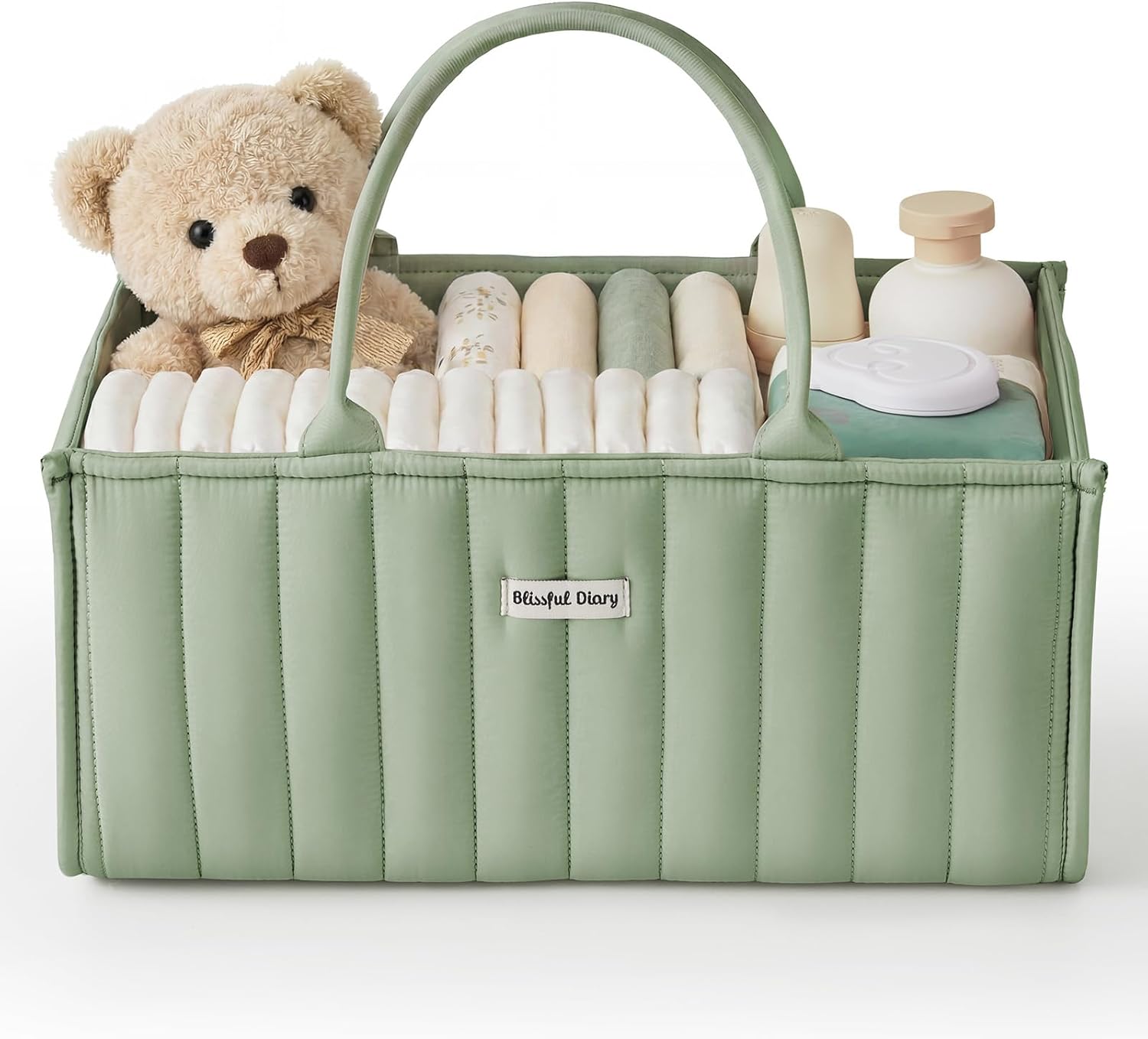
Pros
- Spacious and roomy
- Stylish sage green design
- Sturdy and holds shape
- Lightweight with comfortable handles
- Removable dividers for custom organization
Cons
- Limited to three compartments
- Not waterproof material
- May not fit extra-large diaper packs
Pros
- Sturdy metal and acacia wood frame
- Six 360-degree wheels, two lockable
- Four tiers with removable dividers
- Soft, dust-resistant Oxford fabric bins
- Easy to assemble
Cons
- Large footprint needs dedicated space
- Fabric lining may peel over time
- Weight capacity limited to 30 pounds

Pros
- 3-in-1 design saves space
- BPA-free and eco-friendly materials
- Moisture-locking keeps wipes fresh
- Hooks easily to strollers
- Fits 4-5 diapers of any size
Cons
- Limited color options
- No individual wipe dispensing
- May feel bulky for some

Pros
- Extra-large capacity with 3 tiers
- 5 detachable dividers for organization
- Easy-clean, dustproof Oxford cloth
- Sturdy metal frame and wooden panels
- Smooth rolling 360-degree wheels
Cons
- May have initial odor
- Assembly requires about an hour
- Not height adjustable
Keep storage separate from the baby’s space
AAP changing-table guidance says supplies should be within the caregiver’s reach and outside the child’s reach; a child must not be left unattended on the table. Source: AAP changing-table safety.
If you add furniture, follow the manufacturer’s anchoring instructions. The CPSC Anchor It campaign explains the importance of securing furniture against tip-over. A neat room is not automatically a childproofed room.
Set it up before buying another organizer
Use a clean existing basket as a trial. Group the supplies, place it where you intend to use it and ask the other caregiver to find a diaper and spare outfit. If the arrangement works, you may only need a suitable divider rather than a larger storage system.
Review the contents as routines change. Remove outgrown clothes and items you no longer use. Leave a little open space so one replacement wipes pack does not require reorganizing everything.
Our recommendation
Start with a portable caddy or existing drawer. Upgrade to a cart only when you can name the storage problem it solves. We have not verified current specifications for every listing, so compare exact dimensions before choosing a product.
For the next step, see our removable-divider caddy guide and baby-clothes drawer plan.


Write Your Review
No reviews yet. Be the first to share your experience!