

Long flights can be hard on babies and toddlers. After a few hours in an airplane seat, a child may start kicking, shifting around, or complaining simply because there is nowhere comfortable to put their feet.
A baby airplane footrest can make that space a little easier to manage. Some models are simple inflatable cushions designed to support the legs, while others are large enough to give a toddler a wider area to stretch out and rest.
The five options below are worth considering for different reasons. Some are better for parents who want something compact and versatile, while others make more sense for long-haul flights where extra space matters.
One thing is important before buying: airline policies differ. Some airlines restrict inflatable footrests and seat extenders, particularly during takeoff, landing, and turbulence. Always check the rules for your specific flight and follow the crew’s instructions.

Pros
- Compact and portable when deflated
- Simple to set up and pack away
- Great for long-haul flights
- Affordable travel essential
- Fits most standard airplane seats
Cons
- May not fit extra-wide seats
- Needs manual inflation
- Requires practice to align belt properly

Pros
- Extra legroom for kids
- Supports up to 110 lbs
- Soft, breathable velvet
- Machine washable
- Compact and lightweight
Cons
- Not for aisle or exit rows
- Requires tray table for setup

Pros
- Compact and portable when deflated
- Simple to set up and pack away
- Great for long-haul flights
- Affordable travel essential
- Fits most standard airplane seats
Cons
- May not fit extra-wide seats
- Needs manual inflation
- Requires practice to align belt properly

Pros
- Soft and comfortable material
- Lightweight and portable
- Easy to inflate and set up
- Compact when folded
- Machine washable
Cons
- May require re-inflating during use
- Not suitable for all seat types

Pros
- Ultralight and packable
- Soft, machine-washable velvet
- Quick 2-step setup
- Fits toddlers up to 55 lbs
- Non-slip base stays secure
Cons
- Not compatible with aisle or exit rows
- Requires tray table for attachment
- Airline policies may restrict use
Pros
- Lightweight and packable
- Quick and easy setup
- Soft, breathable fabric
- Non-slip base for stability
- Fits most window/middle seats
Cons
- Not for aisle or exit rows
- Requires tray table for setup
- May not suit all airline policies

1. JefDiee Inflatable Travel Foot Rest Pillow
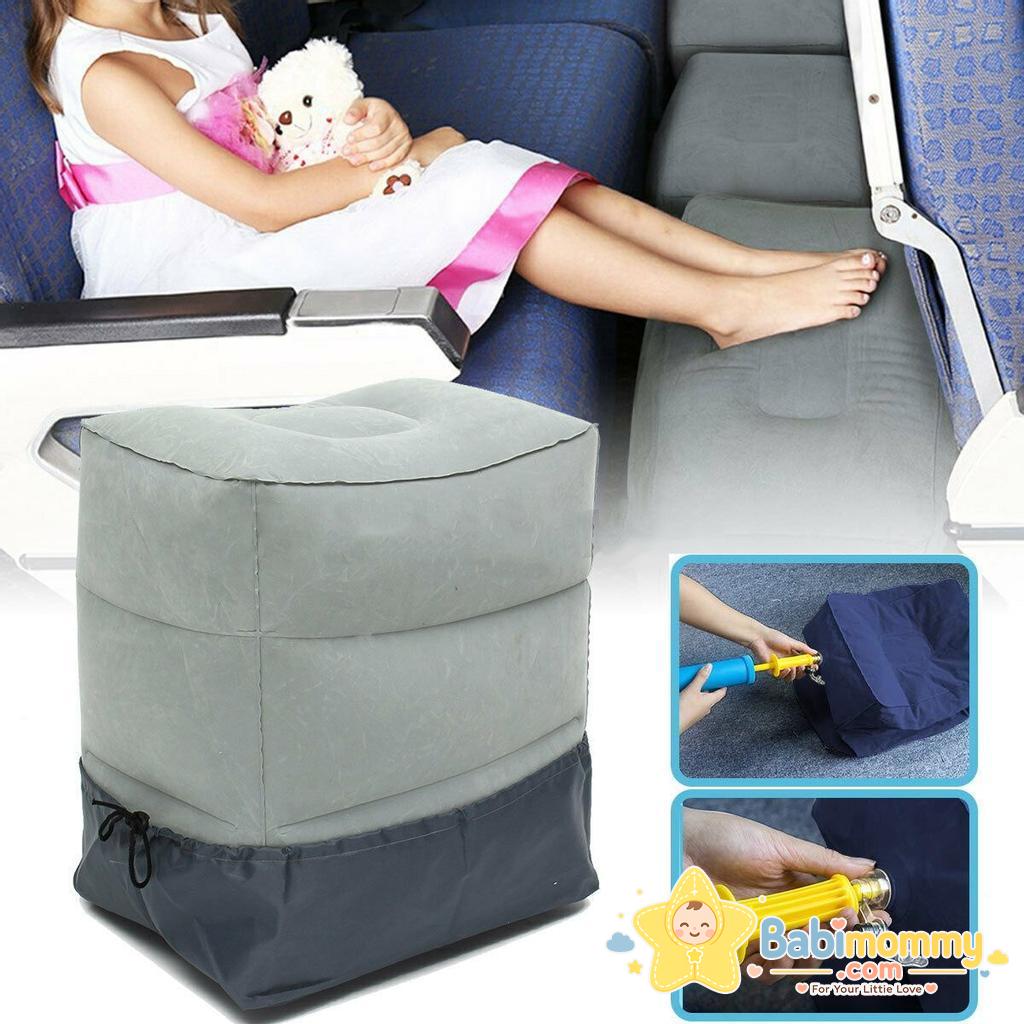
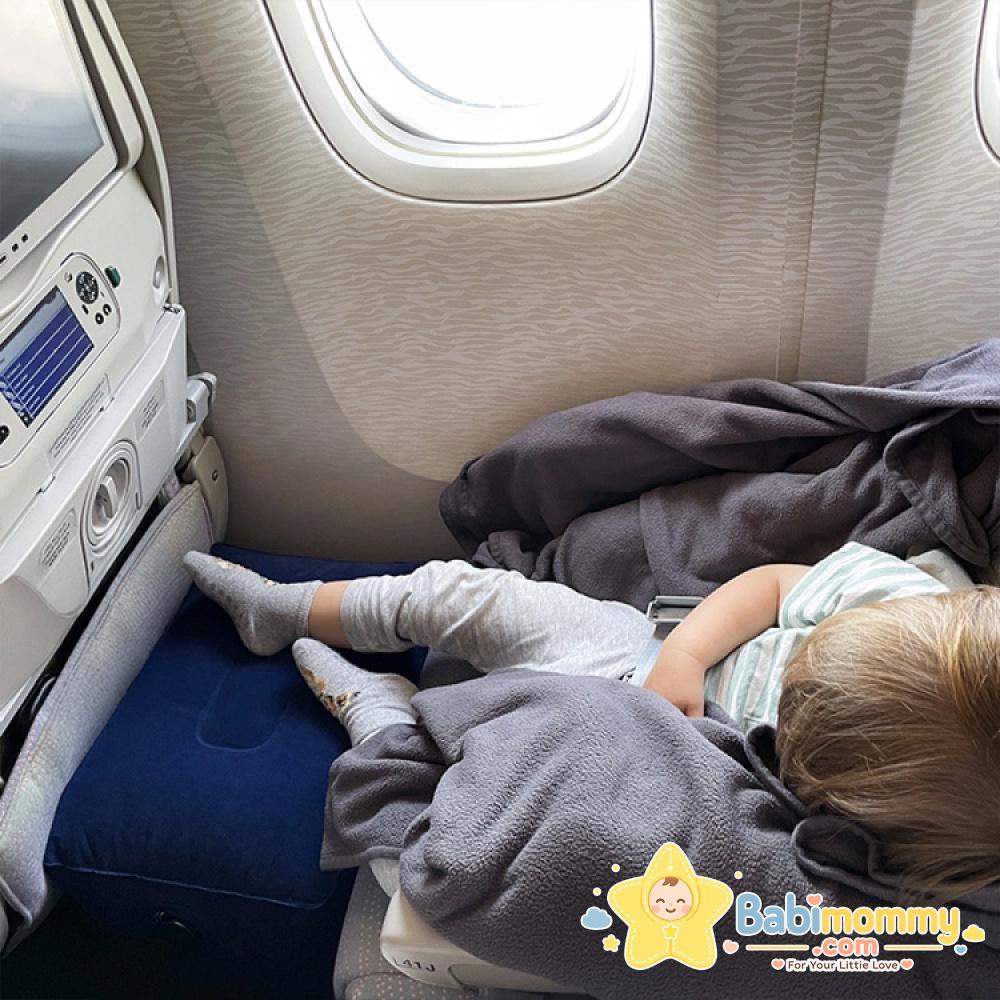
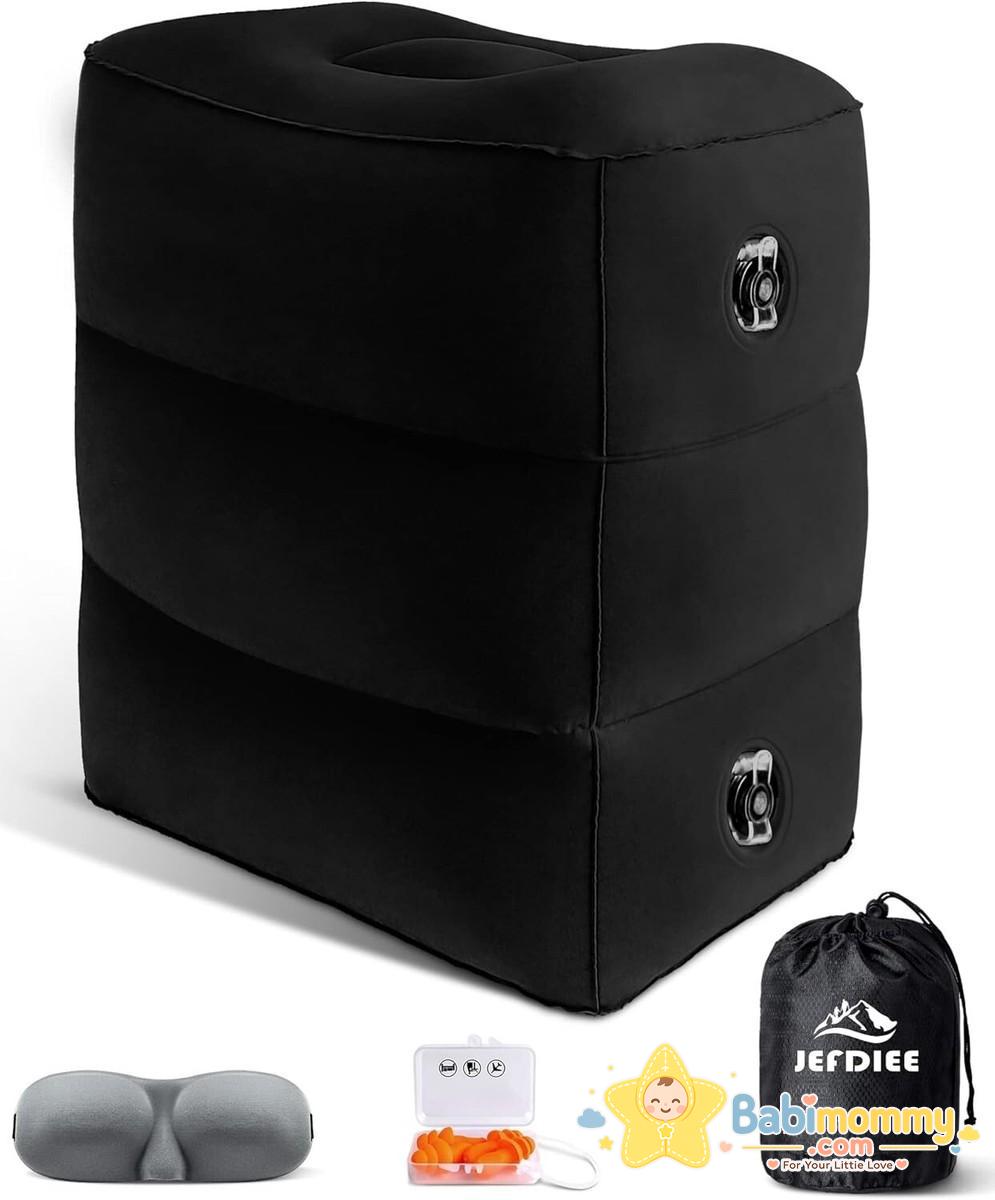
JefDiee is one of the more versatile choices in the baby airplane footrest category. Although it is often used for children, the design is also suitable for adults, which gives it more value for families who travel regularly.
The main feature is its three-height design. The footrest has separate inflatable sections, allowing you to adjust the height according to the available space.
That is particularly useful on airplanes because the space beneath the seat can vary considerably. A toddler may only need a low cushion for their feet, while an older child may prefer a larger surface.
When deflated, the footrest becomes much smaller and can be placed inside a carry-on or travel bag. The flocked surface also feels softer than ordinary plastic, which is useful when a child is using it without shoes.
Pros
- Three adjustable height options
- Compact when deflated
- Lightweight
- Soft flocked surface
- Suitable for children and adults
- Useful for airplanes, cars, and trains
- Easy to store
Cons
- Requires manual inflation
- Can take up considerable space when fully inflated
- May be difficult to use at full height in some economy seats
- Not suitable for every aircraft configuration
- Airline restrictions may apply
Best for
Parents who want a versatile footrest that can be used by both children and adults.
Our Take
JefDiee is a practical option for families who travel regularly. The adjustable height gives parents more control over how much space the footrest uses, while its compact packed size makes it relatively easy to carry.
Its biggest advantage is versatility. You don’t have to put it away after a family vacation. It can be useful during road trips, train journeys, or even as an adult footrest.
The main thing to consider is the size when inflated. Airplane seats are already tight, so parents should make sure the dimensions will work with their particular seating arrangement.
2. Sunany Inflatable Foot Rest Pillow
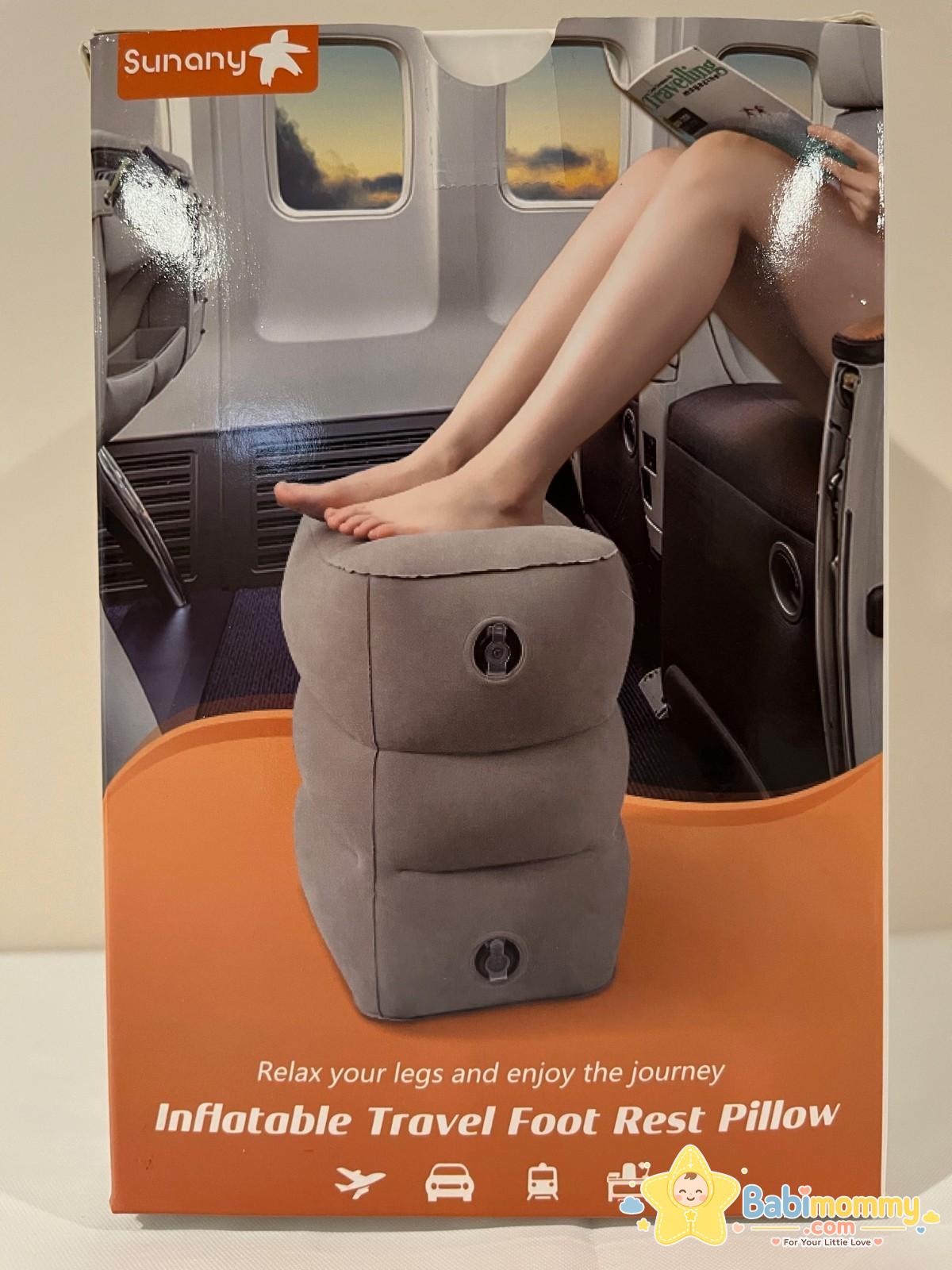
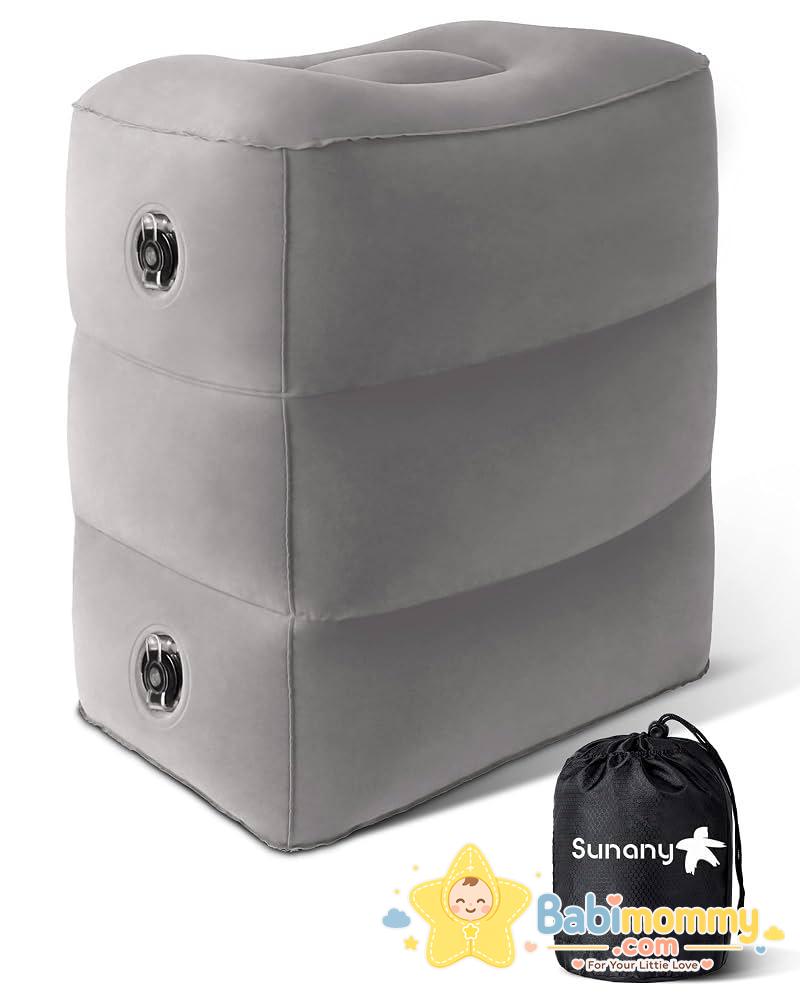
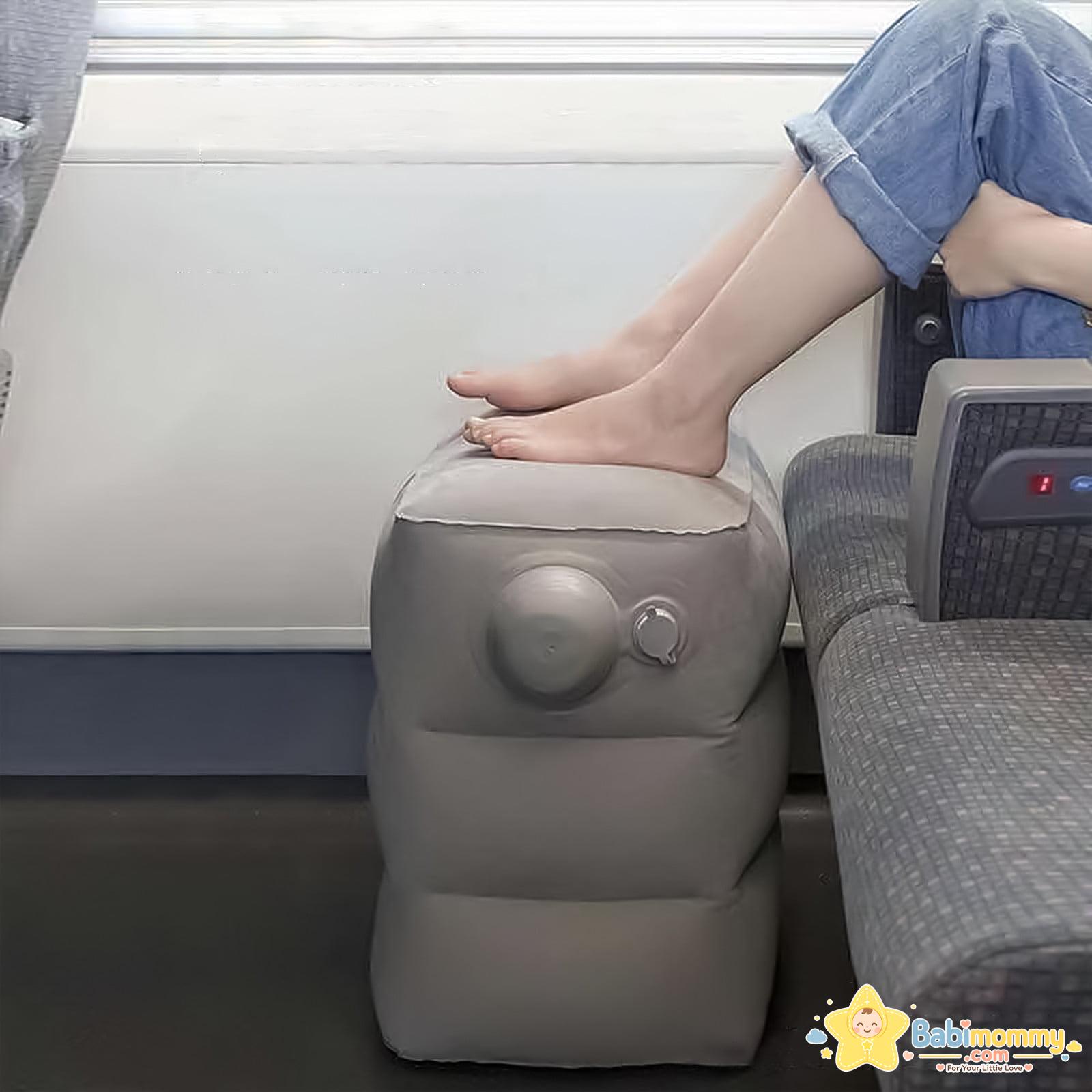
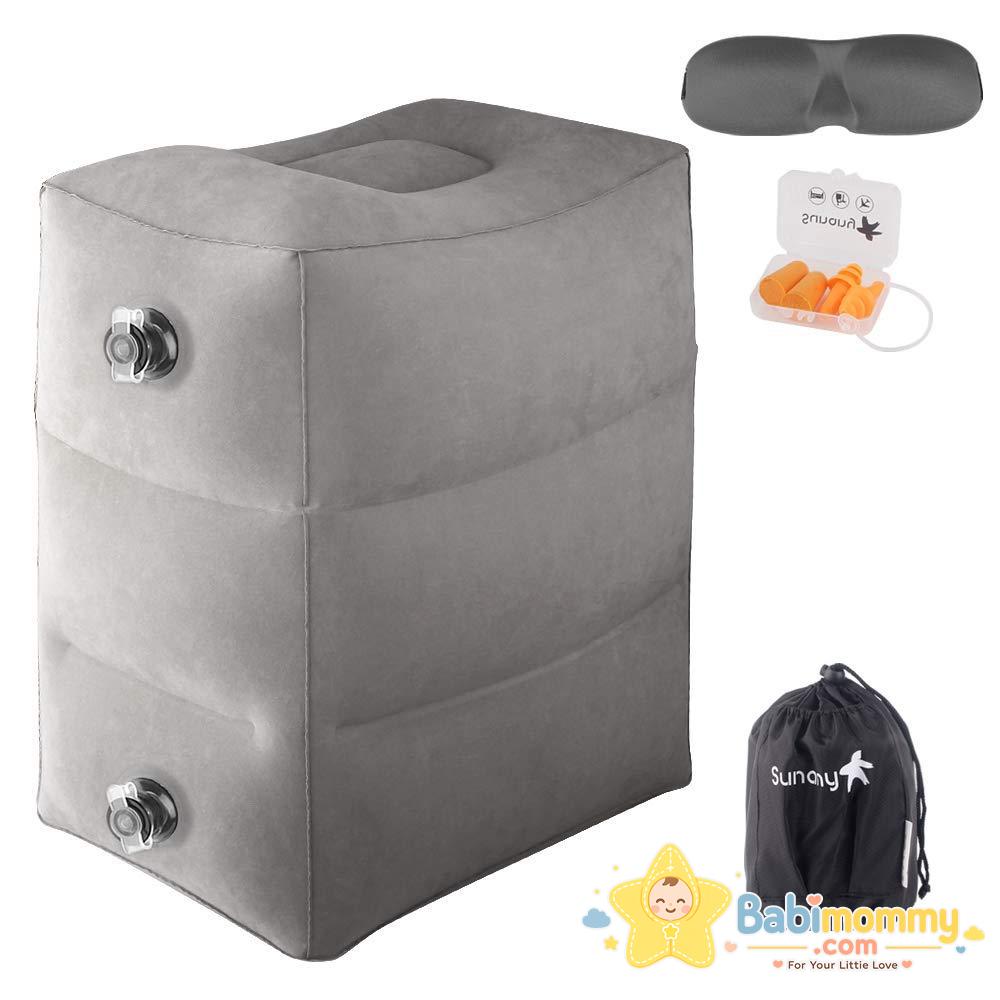
Sunany takes a similar approach but focuses on making the footrest adjustable and easy to carry.
The inflatable design allows parents to control the height rather than being locked into one fixed position. This is useful when traveling with children because their needs can change as they grow.
It can also be used by adults, making it a useful general travel accessory rather than something reserved exclusively for a toddler.
The compact design is another advantage. Once the air is released, the footrest takes up much less room in a suitcase or carry-on bag.
Pros
- Adjustable height
- Compact when deflated
- Lightweight
- Comfortable surface
- Suitable for children and adults
- Useful for different types of travel
- Easy to pack
Cons
- Manual inflation is required
- Valve operation may take some practice
- Full inflation can use valuable footwell space
- May not fit comfortably in every airplane seat
Best for
Families looking for a compact and adjustable airplane footrest that can be used beyond baby travel.
Our Take
Sunany is a good middle-ground choice. It doesn’t attempt to be a full travel bed, but it gives a child somewhere more comfortable to rest their feet and legs.
That can be enough for many families. A toddler who has been sitting for several hours doesn’t always need a full sleeping surface. Sometimes simply having something soft under their feet makes the seat feel much more comfortable.
The adjustable design is especially useful on flights because you can choose a lower setup when space is limited.
3. Maliton Inflatable Airplane Footrest
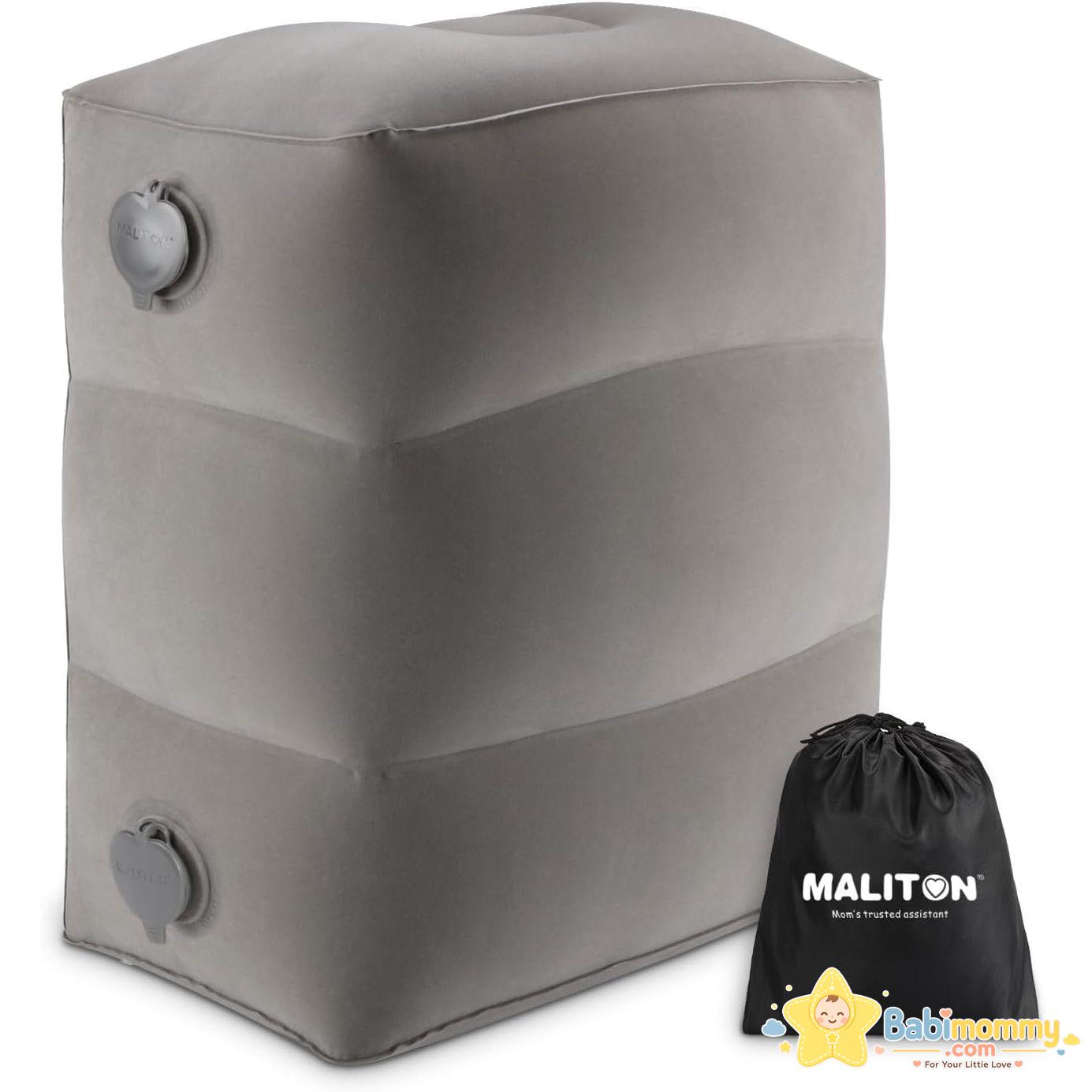
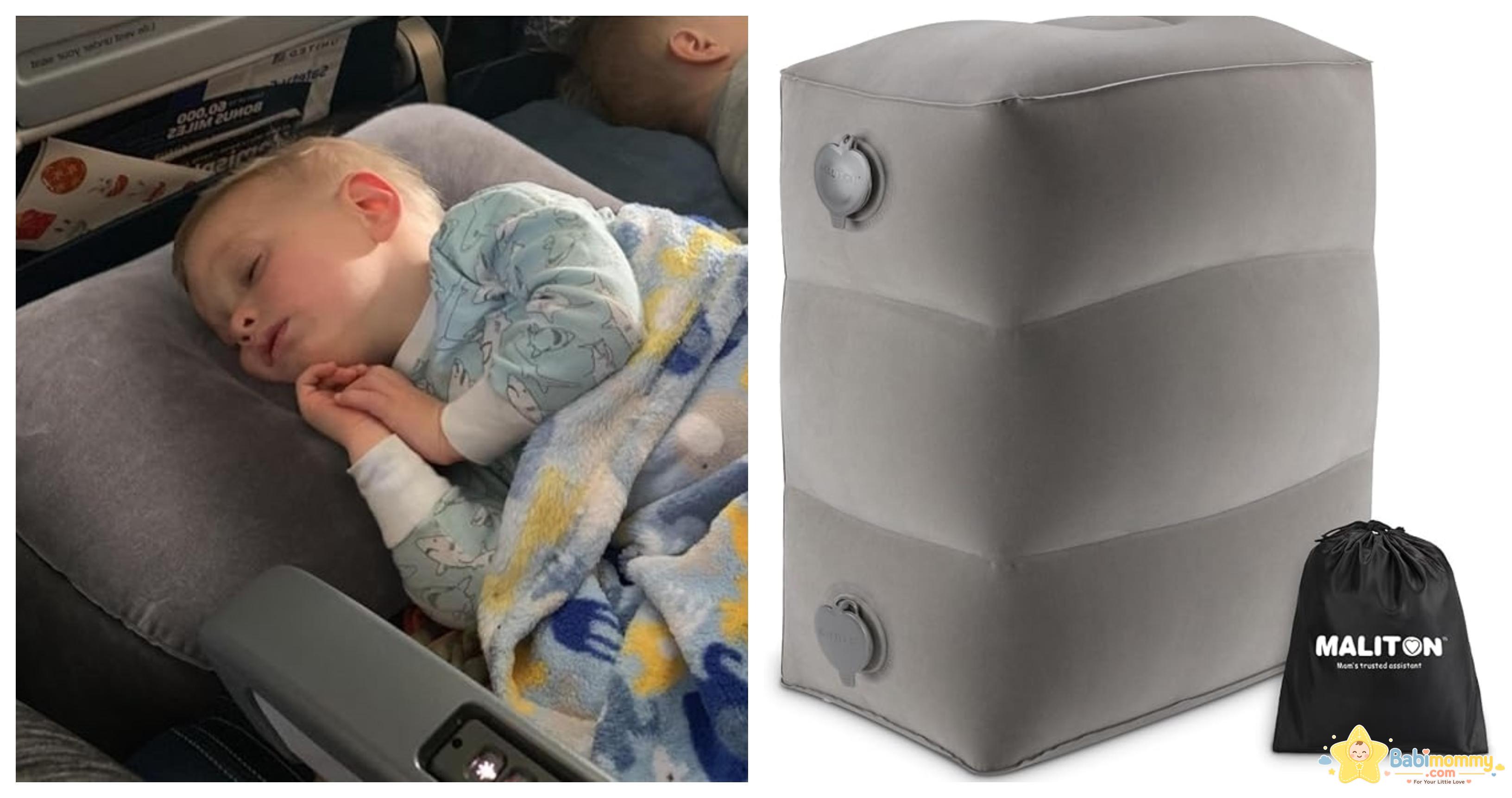
Maliton is designed specifically with children and travel in mind. It works as an inflatable footrest but can also provide a larger surface for a toddler to stretch their legs.
The product uses multiple inflatable sections, giving parents the ability to choose different heights. This makes it easier to adapt the footrest to the space available around the airplane seat.
The soft PVC flocking is another practical detail. It feels more comfortable against bare feet and can be wiped down after use.
For parents taking a long international flight, the larger configuration can be particularly useful. A child who has been sitting for hours can use the extra surface to change position and rest.
Pros
- Three height settings
- Soft flocked surface
- Compact when deflated
- Lightweight
- Can create a larger resting area
- Designed with toddlers in mind
- Useful for other travel situations
Cons
- Takes up more space when inflated
- Requires manual inflation
- Can be difficult to use in tight economy seating
- Not every airline permits this type of product
- Larger than a simple footrest
Best for
Parents who want a footrest that can also provide additional resting space for a toddler.
Our Take
Maliton is a good option for parents who want something between a basic footrest and a full airplane bed.
The adjustable design means you don’t always have to use the largest configuration. If the available space is limited, you can keep it lower. When more room is available, the larger surface can give a toddler more freedom to stretch out.
This flexibility is probably its strongest feature.
4. HOMCA Inflatable Travel Foot Rest Pillow
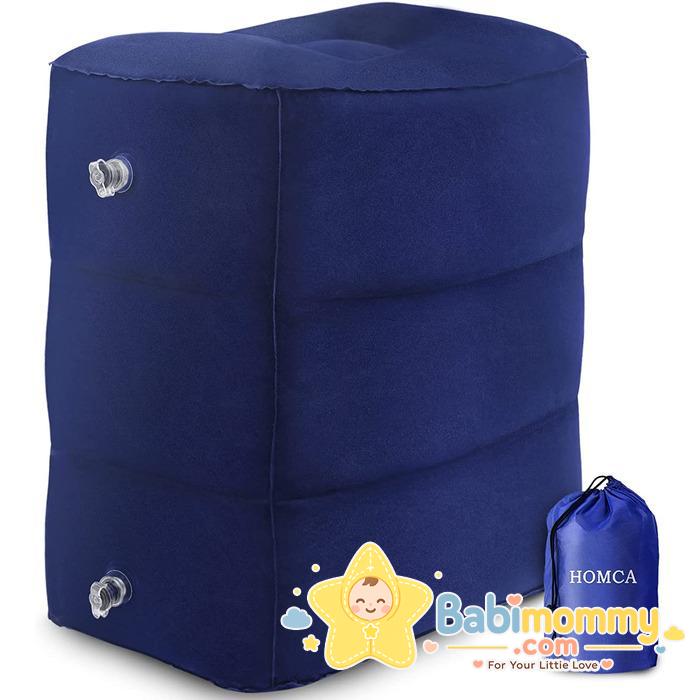

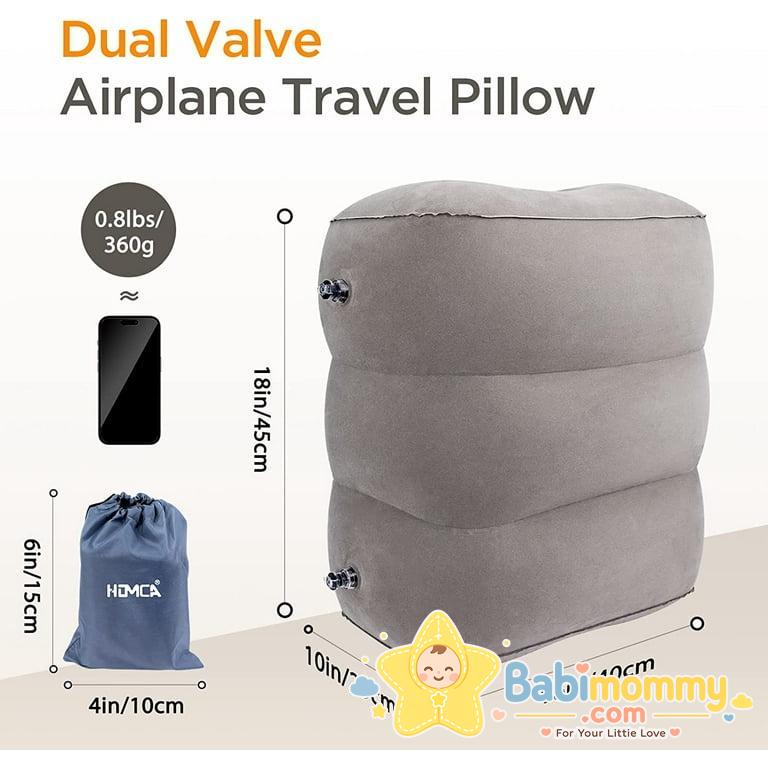
HOMCA is another established option in the inflatable travel footrest category. It is designed for both children and adults and is intended to provide additional support during long journeys.
Compared with a small travel pillow, HOMCA has a larger inflatable surface. This can be useful when a toddler needs more than somewhere to rest their feet.
The product can be deflated for storage and used for different types of travel, including airplanes, cars, and trains.
One reason shoppers may be interested in HOMCA is the amount of customer feedback available for the product. A large review history can make it easier to identify common strengths and complaints before making a purchase.
Pros
- Larger resting surface
- Adjustable design
- Suitable for children and adults
- Compact when deflated
- Soft surface
- Useful for long trips
- Can provide substantial leg support
Cons
- Takes up more room when inflated
- Manual inflation requires some effort
- May be too large for certain economy seats
- Can require adjustment during a long trip
- Airline restrictions may apply
Best for
Families who want a larger inflatable footrest for long-distance travel.
Our Take
HOMCA is better suited to parents who value comfort over having the smallest possible accessory.
The larger surface can be helpful during long flights, particularly when a child becomes restless after sitting in one position for several hours.
However, size is also its main weakness. Before purchasing, parents should look at the inflated dimensions rather than only the packed size.
If your child will be flying economy on a smaller aircraft, a compact model may be easier to manage.
5. Rewondah Inflatable Foot Rest for Air Travel
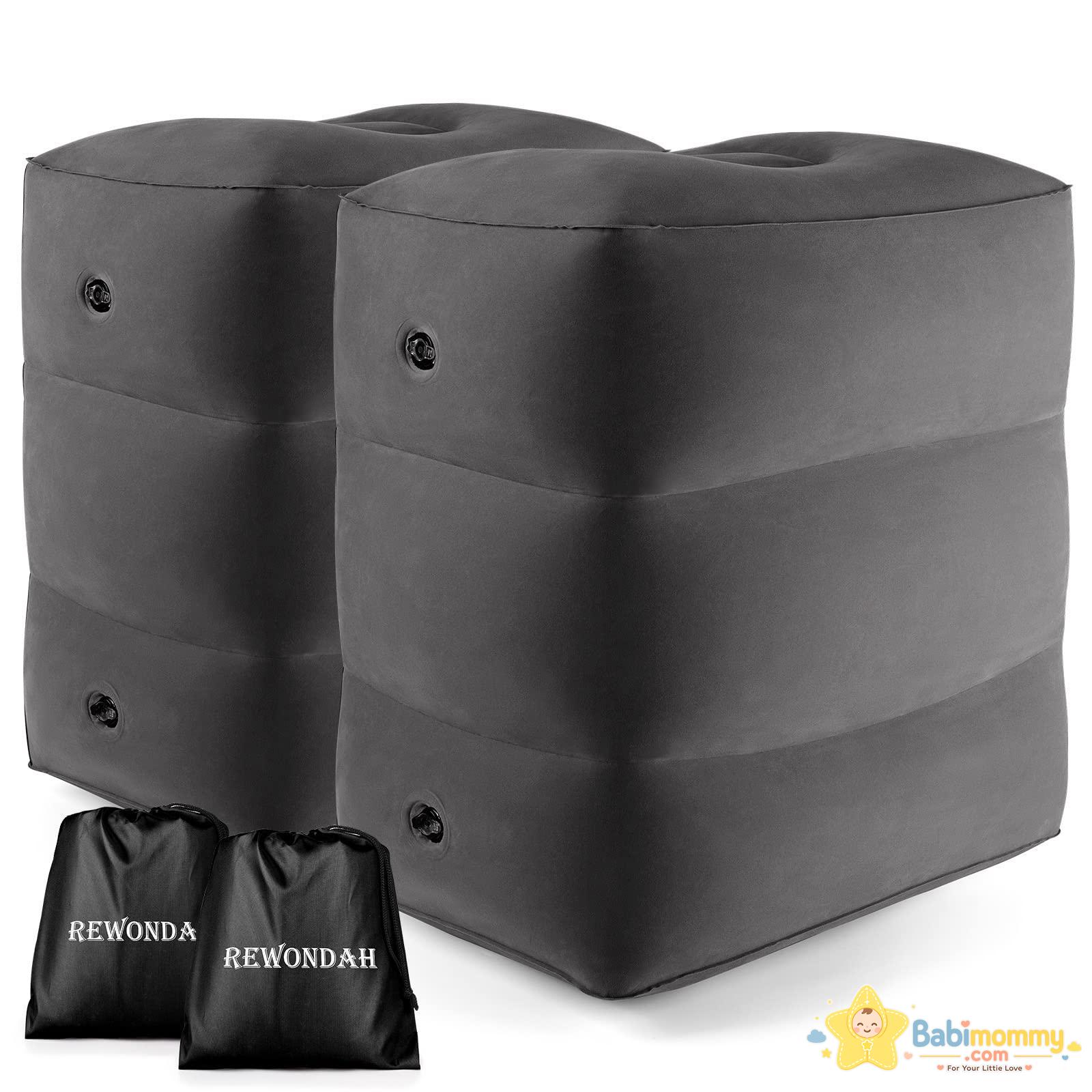
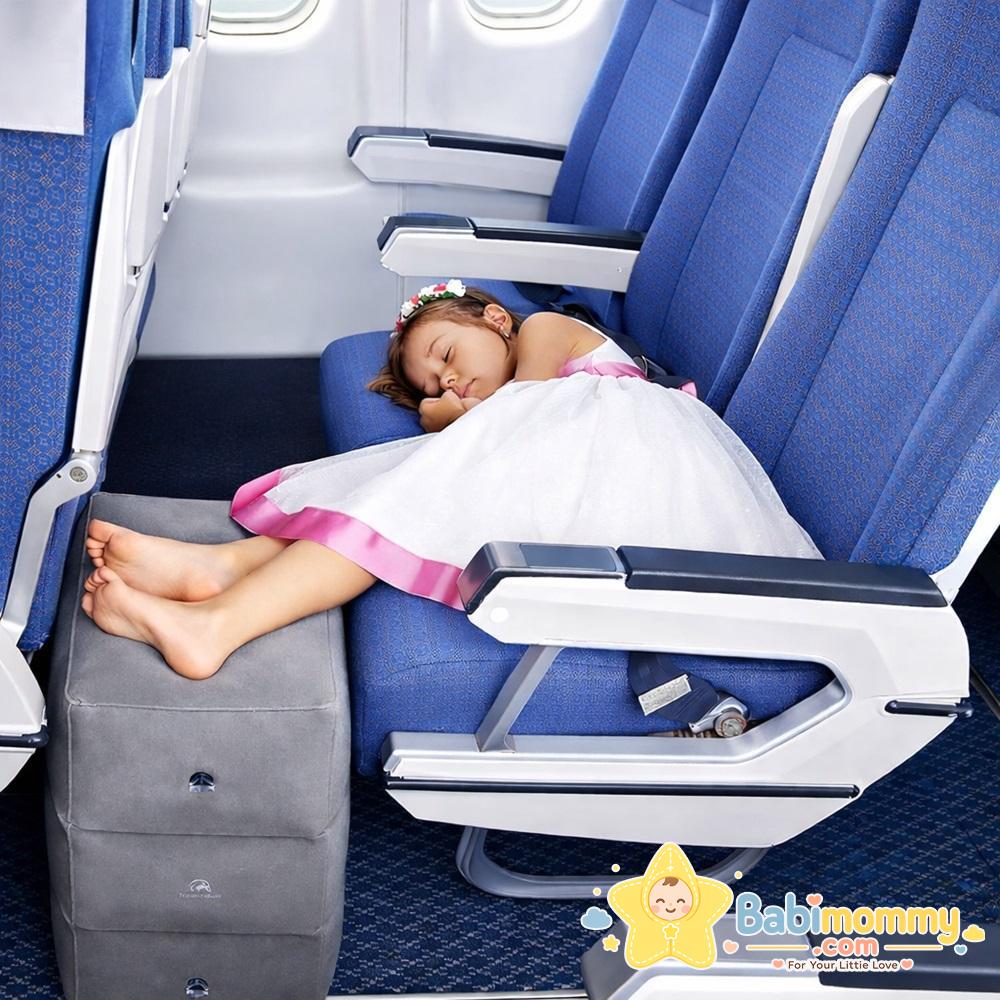
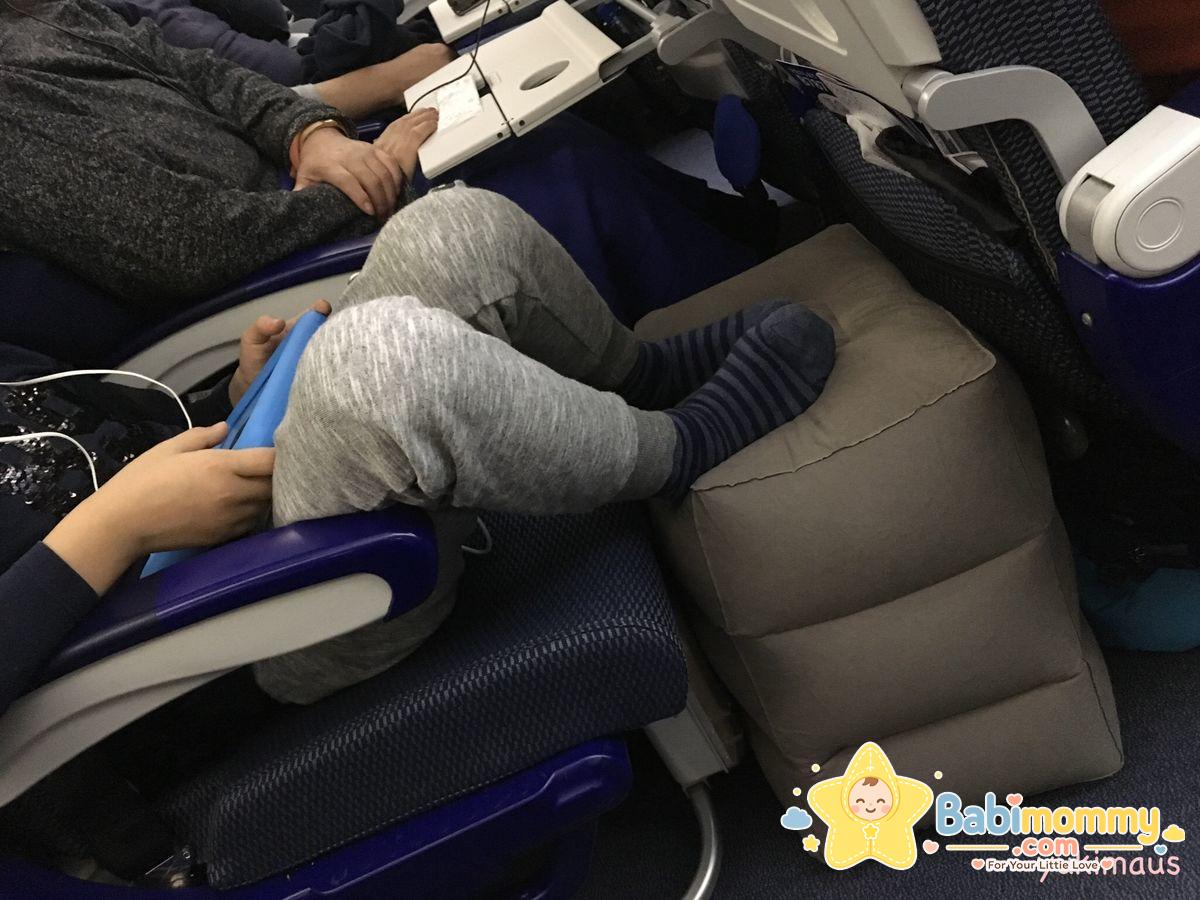
Rewondah is particularly interesting for families who travel with more than one child. Some versions are available as a two-piece set, giving parents the option of providing separate footrests for two children.
The inflatable construction keeps the product relatively compact when packed. Once inflated, it provides a larger surface for resting the legs.
For siblings traveling together, having two separate footrests can be more convenient than trying to share one larger product.
The design can also be useful outside the airplane. Families can take it on road trips or train journeys where children may need additional support during long periods of sitting.
Pros
- Two-piece options available
- Adjustable inflatable design
- Compact when deflated
- Suitable for children
- Provides additional leg support
- Useful for family travel
- Can be used beyond airplanes
Cons
- Two units require additional luggage space
- Manual inflation is required
- May be difficult to use in narrow seats
- Less useful for families with only one child
- Airline rules still apply
Best for
Families traveling with two children who both need additional leg support.
Our Take
Rewondah makes the most sense when there are two children to consider.
Instead of deciding which child gets the footrest, parents can give each child their own. That can make a long flight easier, particularly when both children are old enough to sit independently but still need additional leg support.
For a single child, however, a one-piece adjustable model will usually be simpler and easier to pack.
Baby Airplane Footrest Comparison
| Product | Main Advantage | Best For | Main Drawback |
|---|---|---|---|
| JefDiee | Three height settings | Kids and adults | Can be large in economy seats |
| Sunany | Adjustable and compact | General family travel | Manual inflation |
| Maliton | Footrest + resting surface | Toddlers | Larger when inflated |
| HOMCA | Large surface | Long flights | Takes more space |
| Rewondah | Two-piece option | Families with two children | More luggage space |
What to Look for in a Baby Airplane Footrest
Choosing an airplane footrest is slightly different from choosing one for home. Space is limited, and anything you bring needs to be easy to carry and quick to set up.
Adjustable height
An adjustable footrest is more practical because airplane seats don’t all have the same amount of space. A lower setting may work better when the seat in front is close.
Compact storage
Check the size when the product is deflated, not just the dimensions shown in the product photos. The packed size determines how easy it will be to carry through the airport.
Comfortable material
A soft surface is more pleasant for a child’s feet and legs. Materials that can be wiped clean are also preferable when traveling with young children.
Easy inflation
A footrest shouldn’t be difficult to inflate. Practice using it at home before your trip so you know exactly how the valves work.
Stability
Once inflated, the footrest should stay reasonably stable. A product that constantly shifts can become frustrating for both the parent and child.
Correct size
Always consider your child’s age, height, and weight. A footrest that works well for a three-year-old may not be appropriate for a much younger baby.
Are Baby Airplane Footrests Worth It?
For a short flight, a footrest may not be necessary.
For a long-haul journey, it can be a useful addition to a family’s carry-on.
The biggest advantage isn’t necessarily that a toddler will sleep for the entire flight. A more realistic benefit is giving the child somewhere comfortable to rest their feet and stretch their legs.
After several hours in an airplane seat, even a small amount of additional space can make a difference.
Inflatable footrests are particularly convenient because they become much smaller once deflated. That makes them easier to store when the child isn’t using them.
They can also have uses after the flight. A family can take the same product on road trips, train journeys, hotel stays, or other situations where children have to sit for long periods.
The main concern is airplane compatibility. A footrest that works perfectly on one flight may not be suitable on another because seat pitch, aircraft design, and airline policies differ.
Final Verdict
The JefDiee Inflatable Travel Foot Rest Pillow is a strong all-around choice for families who want an adjustable product that both children and adults can use.
The Sunany Inflatable Foot Rest Pillow is a good option for parents who want something compact and flexible for different types of travel.
The Maliton Inflatable Airplane Footrest is more appealing when a toddler needs additional space to stretch out rather than simply somewhere to rest their feet.
The HOMCA Inflatable Travel Foot Rest Pillow is worth considering for families who prioritize a larger resting surface and want a product with a substantial history of customer feedback.
The Rewondah Inflatable Foot Rest makes the most sense for families traveling with two children who may both need additional leg support.
Overall, JefDiee is probably the most versatile choice, while Maliton is more suitable for parents looking for additional space for a toddler to rest.
Before buying any baby airplane footrest, check the current rules of your airline and make sure the inflated dimensions will work with the seats on your flight. A good footrest should make traveling with a child easier, not create another problem once you’re on board.


Write Your Review
No reviews yet. Be the first to share your experience!