

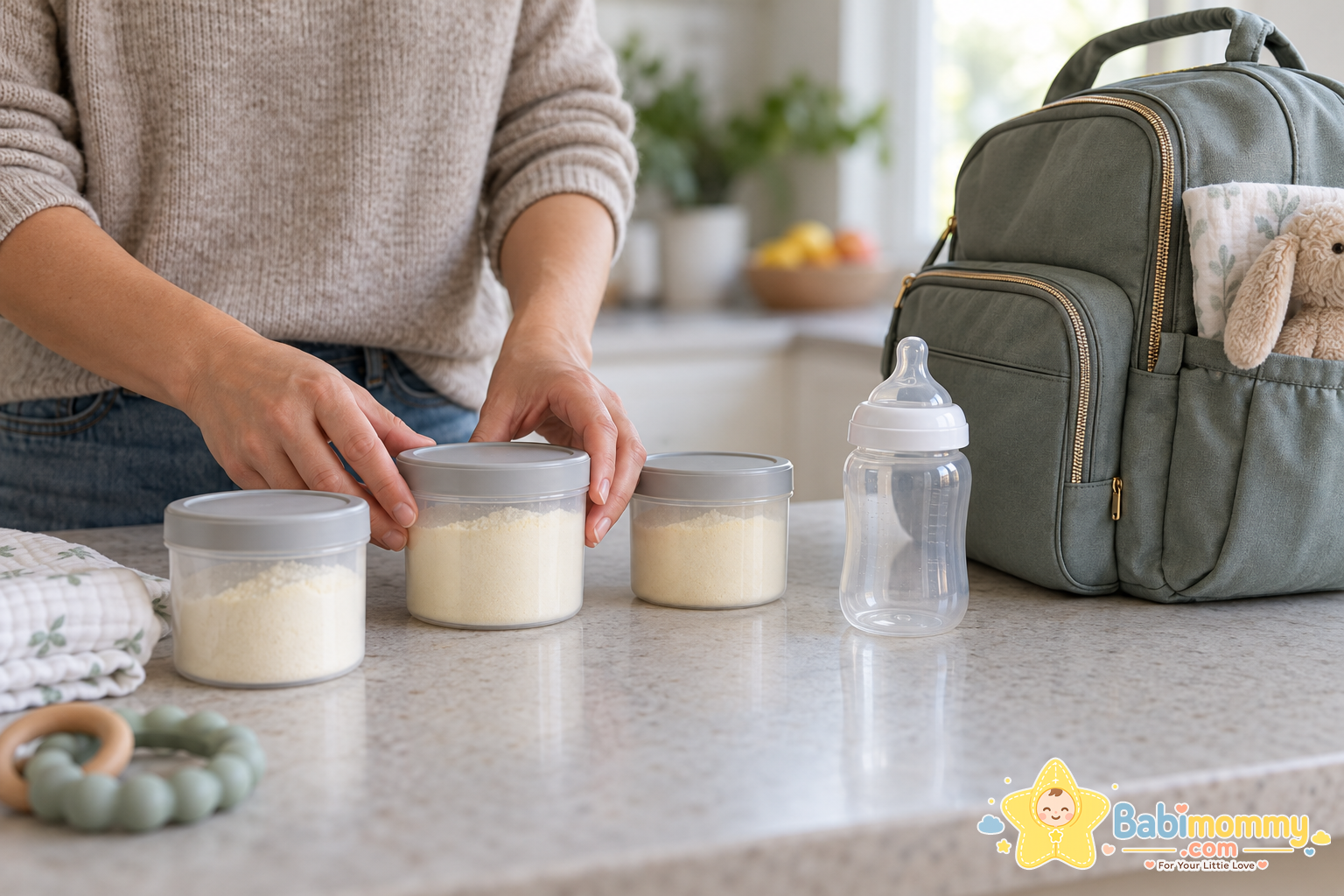
Reusable food pouches are flexible containers that can be filled and carried, while glass jars provide a rigid container with a wide opening. Pouches can be convenient for portable portions, but their seams and spouts require careful cleaning. Glass jars are easy to inspect but are heavier and can break if dropped. Compare capacity, lid design, cleaning access, freezer or reheating instructions, and age-appropriate feeding use. Some pouches are intended for spoon-feeding or supervised self-feeding rather than direct sucking. Glass jars must be inspected for chips and handled carefully around children.
How we approached this comparison: This is an editorial guide to product purpose, fit, setup, care, and ordinary use. It is not a hands-on test. Confirm the current instructions for the exact model before choosing or using it.
Start with the job you want to make easier, then compare the specific products on your shortlist. The sections below focus on realistic routines and the details that are easy to miss in a product photo.
At a glance
| What to compare | First option | Second option |
|---|---|---|
| Typical advantage | Reusable food pouches are flexible containers that can be filled and carried, while glass jars provide a rigid container with a wide opening. Pou… | Compare capacity, lid design, cleaning access, freezer or reheating instructions, and age-appropriate feeding use. Some pouches are intended for … |
| Check before buying | Fit, instructions, care | Compatibility, storage, routine |
| Good starting point | Match it to your usual use | Check the exact model |
Understanding the first option
Reusable food pouches are flexible containers that can be filled and carried, while glass jars provide a rigid container with a wide opening. Pouches can be convenient for portable portions, but their seams and spouts require careful cleaning. Glass jars are easy to inspect but are heavier and can break if dropped.
This format works best when its particular job matches the moment it is meant to simplify. Think about who will use it, where it will be stored, and whether the child’s age or stage changes how it fits. A useful feature matters only if it is easy to use in the actual routine.
What the alternative changes
Compare capacity, lid design, cleaning access, freezer or reheating instructions, and age-appropriate feeding use. Some pouches are intended for spoon-feeding or supervised self-feeding rather than direct sucking. Glass jars must be inspected for chips and handled carefully around children.
The second format addresses a related need through a different design. Look beyond staged photos at access, attachments, surfaces, closures, cleaning, and how quickly an adult can put it away. Picture the most rushed moment of the day; the option that remains manageable then may be the better fit.

Fit, sizing, and compatibility
Use only food-grade products designed for the intended use. Follow the manufacturer’s temperature limits and avoid putting hot food into a container unless permitted. Keep small caps away from children. Measure the actual space or equipment before ordering. Product names do not guarantee compatibility: details can depend on model, surface, age, material, or dimensions. Do not force a fit or cover a feature needed for safe use; contact the manufacturer if the manual is unclear.
undefined
Daily routine and handoffs
undefined Try the routine at home before relying on it during a busy outing. Ask another caregiver to repeat the steps using the instructions. Notice whether both hands are needed, how the child responds, and where the item goes afterward. A clear storage place makes handoffs easier.
undefined
Cleaning and long-term care
Disassemble pouch valves and wash all channels. Wash glass jars and inspect rims for cracks or chips. Dry completely before storage and replace damaged containers. Compare how often it needs cleaning, whether small parts come apart, how long it takes to dry, and whether replacement parts exist. Store it only when dry and inspect parts that move, fasten, or contact the child. Stop using an item that is damaged or difficult to clean.
undefined

Evidence and safety context
CDC food-safety advice emphasizes clean handling and appropriate storage. A container’s portability does not preserve food temperature; use current food-storage guidance for homemade baby food. This information provides context, not proof that one style is universally better. Pair it with product-specific instructions and professional advice when your child’s health or development affects the decision.
undefined
Which families may prefer each style
Reusable food pouches are flexible containers that can be filled and carried, while glass jars provide a rigid container with a wide opening. A caregiver who values that strength may prefer the first format if it fits the room and instructions. Compare capacity, lid design, cleaning access, freezer or reheating instructions, and age-appropriate feeding use. Another household may value that tradeoff more. Families can choose different formats for separate situations when each product is used as directed.
undefined
How to compare total value
List the situations in which you expect to use the product most often. Compare setup time, child fit, adult comfort, cleanup, storage, and whether another caregiver can use it. Add the cost of required accessories or replacement parts. This practical review is more useful than comparing feature counts alone.
undefined
Practical buying and use checklist
Write down the problem you want to solve and the constraints that will not change: available space, storage, cleaning access, budget, or how often the item travels. Compare exact models, read the care instructions, measure the fit, and check replacement-part availability. If it affects sleep, feeding, bathing, travel, or another safety-sensitive routine, review current professional guidance before relying on it.
Supervise feeding and inspect every container before use. Do not give a child a damaged jar, loose cap, or pouch part that can detach.
Useful context: CDC food-safety advice emphasizes clean handling and appropriate storage. A container’s portability does not preserve food temperature; use current food-storage guidance for homemade baby food.
Frequently asked questions
Are reusable pouches hard to clean?
They can have narrow seams and spouts; disassemble and clean every part as directed. Check the exact product instructions and adapt the routine to your child and home.
Can glass jars go in the freezer?
Only if the jar maker says so and the product is designed for freezing. Check the exact product instructions and adapt the routine to your child and home.
Can a baby suck food from a pouch?
Follow age and feeding guidance; supervise and use the pouch as intended. Check the exact product instructions and adapt the routine to your child and home.
Which is easier to inspect?
A glass jar’s contents are visible, while pouch seams need attention during cleaning. Check the exact product instructions and adapt the routine to your child and home.
Can I warm food in either container?
Only if the manufacturer allows the method and temperature. Check the exact product instructions and adapt the routine to your child and home.
How long can homemade food stay out?
Follow current food-safety guidance and the child’s clinician where relevant. Check the exact product instructions and adapt the routine to your child and home.
When should I replace a pouch?
Replace it if seams, valves, or material are damaged. Check the exact product instructions and adapt the routine to your child and home.
Can jars be reused?
Reuse only food-grade containers that remain intact and can be cleaned thoroughly. Check the exact product instructions and adapt the routine to your child and home.
Trying the setup before committing
Before relying on a product, try it in the place where it will be used most. Follow the setup steps slowly, then repeat them at a normal pace. Notice whether a fastener is hard to reach, a surface is awkward to clean, a child can pull at an attachment, or another caregiver needs an explanation. These details often reveal whether the item will be practical after the first week.
After several uses, review what actually helped and what created extra work. Recheck fit, wear, storage, and instructions as the child grows or the room changes. If a manual leaves an important safety question unresolved, contact the maker or a qualified professional instead of guessing. Keep the setup simple enough that every caregiver can use it consistently.
Putting the comparison into practice
Before choosing, set up a simple trial using the space, supplies, and caregiver who will actually use this product. Follow the instructions from beginning to end, then notice where the routine feels smooth and where it slows down. Check the parts that must be fitted, fastened, cleaned, or stored, and consider what happens when the child is tired or the adult has only one free hand. These practical details help distinguish a useful feature from one that looks appealing but adds another step.
After several uses, review the fit and condition again rather than assuming the first setup will remain right. Children grow, rooms get rearranged, and travel routines change. Recheck dimensions, closures, seams, electrical parts, or storage rules that apply to the product. If the manual does not answer a safety or compatibility question, contact the manufacturer or a qualified professional before improvising. A short review makes it easier to keep the routine simple and retire anything that no longer works as intended.
Final thoughts
The choice comes down to the task, fit, and routine your household can maintain. Follow product-specific instructions, check compatibility, and reassess as your child grows. The most useful option is the one that fits your real space and makes the task easier without adding steps caregivers are unlikely to follow.
Revisit this reusable baby food pouches vs glass jars comparison when you want to review the differences and practical buying points.


