

Choosing between baby carrier cover vs babywearing jacket options is less about finding a universal winner and more about finding the product that fits the way your family uses it. A carrier cover adds a layer around a baby already in a carrier, while a babywearing jacket is worn by the adult and may have a panel that surrounds both bodies. Fit, weather, the child’s face visibility, and carrier compatibility are more important than the style. Keep the baby’s airway visible and unobstructed, and follow carrier instructions.
This guide compares the everyday differences, explains how each option may fit a real routine, and offers a practical checklist before purchase. It is an editorial overview of product types rather than a hands-on test of individual brands. Features, materials, and instructions vary by model, so confirm the current manufacturer details before using any item with a child.
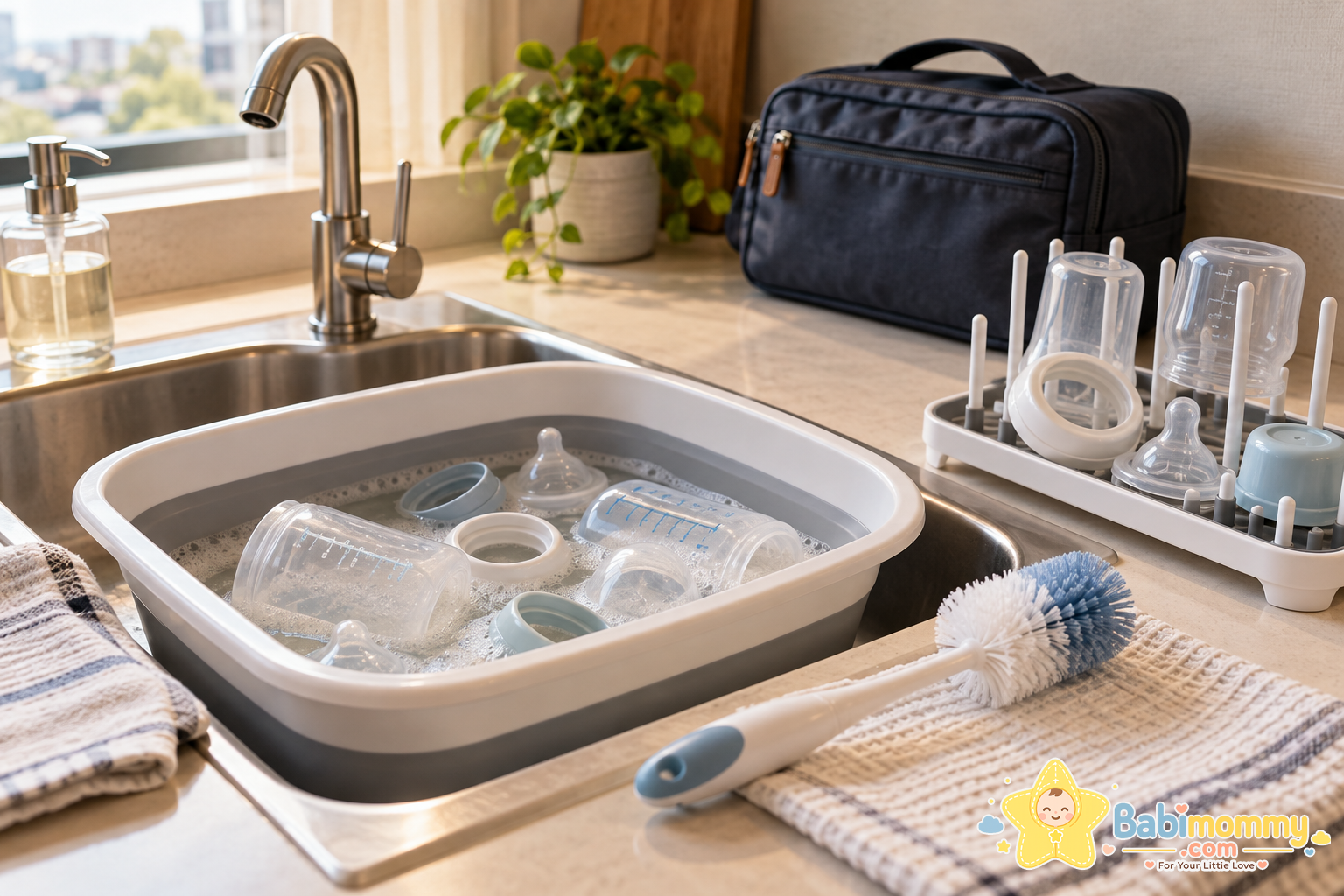
Illustrative image: Bottle parts in a dedicated wash basin beside a drying rack in a hotel kitchenette.
Why this comparison comes up
Families often consider these two options when one part of the day feels harder than it needs to be. A carrier cover adds a layer around a baby already in a carrier, while a babywearing jacket is worn by the adult and may have a panel that surrounds both bodies. Fit, weather, the child’s face visibility, and carrier compatibility are more important than the style. Keep the baby’s airway visible and unobstructed, and follow carrier instructions. The best comparison starts with the task and then checks the practical details that determine whether a product fits the home.
For shared caregiving, look for intuitive closures and clear instructions. A grandparent, babysitter, or partner may not use the item exactly as the primary caregiver does. A simple routine and an easy-to-check fit can reduce confusion, especially when the product must be set up in a hurry.
Option one: baby carrier cover
baby carrier cover: This option tends to make the most sense when its core feature addresses a regular need in the family’s routine. Consider how it will be prepared, fitted, carried, or stored each time it is used—not only how it looks in a product photo. A manageable setup can make the difference between an item that becomes part of the routine and one that stays in a drawer.
Its main advantage is the way it handles its particular job: a carrier cover adds a layer around a baby already in a carrier, while a babywearing jacket is worn by the adult and may have a panel that surrounds both bodies. Before buying, check the dimensions and the maker’s use instructions, then picture the item in the exact place where you plan to use it. Ask whether another caregiver could understand the setup without extra explanation. Also consider what happens after the task is done: can it be cleaned quickly, does it dry properly, and where will it go until next time?
Possible drawback: A feature that is helpful in one situation may add bulk, extra cleaning, or another step in a different one. Check the parts that contact the child or food, confirm the fasteners and seams are durable, and be realistic about whether the family will maintain it as directed.
Option two: babywearing jacket
babywearing jacket: This alternative may be a better match when the household values a different balance of convenience, coverage, portability, or cleanup. Its value becomes clearer when you compare it against the actual routine rather than the first option’s marketing claims. Look at the usable space, how the product opens or adjusts, and whether it works with the furniture or accessories already in the home.
One practical strength is that it can simplify a particular part of the day. It may be easier to set out, pack, wash, or share between caregivers, depending on the model. Check the full product description for exact materials, measurements, included parts, and care rules. If compatibility is mentioned, confirm the exact model or surface; broad wording does not always mean that every version will fit.
Possible drawback: The same design may be less convenient in a cramped room, during travel, or when the child is at a different stage. Consider the cost of replacement pieces or refills, and avoid assuming that a familiar-looking item is safe or compatible without checking its instructions.
Which details deserve a closer look?
Start with measurements and instructions. Product names do not tell the whole story about fit, weight, included accessories, or use limits. Read the specifications for the exact model, and contact the manufacturer when an important compatibility point is unclear.
Next, walk through the steps of using the product. How is it set up? Does it need adjustment each time? How will you clean it, and where can it dry? These small tasks are easy to overlook while shopping, but they shape whether a product is genuinely convenient over the long term.
Then consider changing needs. A baby’s size, mobility, and routines develop, and a household may use different spaces over time. Choose an option that meets the current need without stretching its stated limits. If the child is between sizes or stages, review the manufacturer’s age, height, weight, and fit guidance. Avoid buying a product on the assumption that it will remain appropriate for a long time. Recheck its fit as the child grows and stop using it when the stated limits or instructions say to do so.
Advantages and drawbacks at a glance
- baby carrier cover can be a good fit when: its format matches the task and its size works for the space.
- baby carrier cover may be less convenient when: its upkeep or setup conflicts with the family’s routine.
- babywearing jacket can be a good fit when: its alternative approach solves a frequent practical problem.
- babywearing jacket may be less convenient when: it requires a compatibility check or extra care that is easy to overlook.
Practical buying advice
Before you order, write down the one or two features that matter most. Compare only products that meet the basic requirements, then narrow the list by fit, ease of cleaning, and ease of use. Check whether the package includes everything pictured; accessories shown in a listing are not always included. Look at return and warranty terms as well, particularly for items whose fit is difficult to judge online.
Keep the setup simple. If a product requires a surface, attachment, charger, or cleaning tool, make sure that piece has a place in the routine. Store instructions where other caregivers can find them. When a product relates to feeding, sleep, bathing, mobility, or car travel, follow the relevant professional guidance and manufacturer manual; a comparison article cannot replace individual safety advice.
Finally, inspect the item when it arrives. Confirm the model and size, check for damage, assemble it exactly as directed, and test its operation before using it with the child. Stop using it if a part breaks, a fit changes, or the instructions are unclear. A second question is how the product fits into the rest of the setup. Check nearby furniture, surfaces, outlets, straps, or other accessories that could interfere with use. A useful purchase should work with what the family already owns, rather than requiring an improvised workaround.
Related Babimommy guides
For more ideas around everyday baby routines, read our guides to portable nursery routines, baby play and floor-time ideas, and checking bath water temperature.
Frequently asked questions
Which is easier to use every day?
That depends on the routine. baby carrier cover may suit families who value its particular setup, while babywearing jacket may be simpler in a different space or situation. Try to identify the step that regularly causes friction and choose around that.
Can either option be used away from home?
Possibly, if its size, care instructions, and intended use fit the outing. Check how it packs, whether it can be cleaned after use, and whether it requires a stable surface or compatible accessory.
What should I check before buying?
Confirm dimensions, compatibility, age or size guidance, included parts, material details, and cleaning instructions. Product titles can leave out details that matter, so read the current manufacturer information.
Is the more expensive option better?
Not automatically. Compare the features you will actually use, the expected cleaning routine, replacement parts, and durability details. A simpler model can be the better fit if it meets your needs.
How do I keep it clean?
Follow the maker’s care instructions, remove visible residue promptly, and allow all parts to dry fully. Pay special attention to seams, hinges, valves, straps, or other areas where moisture or debris can collect.
Can I use both options?
In some homes they complement one another because they suit different locations or routines. If using both, assign each a clear role and avoid adding accessories that conflict with product instructions.
How do I know when my child has outgrown it?
Use the manufacturer’s stated size and age limits and watch for changes in fit, movement, or comfort. Stop using it if it becomes unstable, damaged, or difficult to use as intended.
What is the most important safety check?
Follow the product manual and keep direct supervision where the item involves a child. Check for a secure fit, clear airflow or visibility where relevant, intact parts, and a setup that does not block restraints, exits, or moving mechanisms.
Which one should you choose?
Choose baby carrier cover if its main design benefit matches the way your family will use it and the fit checks out. Choose babywearing jacket if its format better suits your space, schedule, or cleaning routine. If neither option solves the main problem without a workaround, keep looking. A well-matched product should make an ordinary task a little easier while remaining straightforward to use and maintain.
Before making a final decision, review current specifications, user instructions, and any safety guidance relevant to your child’s age and stage. Revisit the setup as needs change, and make sure every caregiver understands how the product is intended to be used.
Babimommy editorial note: Product types and features vary by model. This guide is for general comparison and does not describe hands-on testing.



Write Your Review
No reviews yet. Be the first to share your experience!